Nursing practice questions with comprehensive rationales
NurseDive Free Nursing Practice Question
A nurse is reviewing the medication record for a client who has chronic kidney disease. Which of the following medications should the nurse identify as having the potential to cause nephrotoxicity?
A. Ondansetron
Ondansetron is an antiemetic commonly used to prevent nausea and vomiting, and it is not typically associated with nephrotoxicity.
B. Diphenhydramine
Diphenhydramine is an antihistamine used for allergy symptoms and as a sleep aid. It is not known to cause nephrotoxicity.
C. Vancomycin
Vancomycin is an antibiotic that can cause nephrotoxicity, especially when administered in high doses or in individuals with impaired renal function. Monitoring renal function is crucial when using vancomycin.
D. Omeprazole
Omeprazole is a proton pump inhibitor used to reduce gastric acid secretion and treat conditions such as gastroesophageal reflux disease (GERD) and peptic ulcers. It is not associated with nephrotoxicity.
This question is an excerpt from Nurse Dive's nursing test bank - Ati Med Surg Proctored Exam 8. Take the full exam now
Full Explanation
A. Ondansetron is an antiemetic commonly used to prevent nausea and vomiting, and it is not typically associated with nephrotoxicity.
B. Diphenhydramine is an antihistamine used for allergy symptoms and as a sleep aid. It is not known to cause nephrotoxicity.
C. Vancomycin is an antibiotic that can cause nephrotoxicity, especially when administered in high doses or in individuals with impaired renal function. Monitoring renal function is crucial when using vancomycin.
D. Omeprazole is a proton pump inhibitor used to reduce gastric acid secretion and treat conditions such as gastroesophageal reflux disease (GERD) and peptic ulcers. It is not associated with nephrotoxicity.
Similar Questions
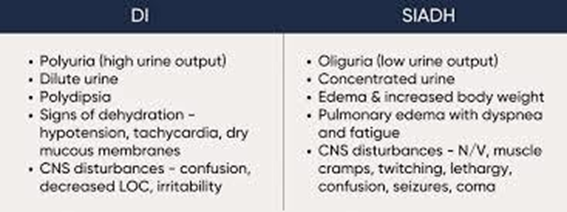
A nurse is collecting the medical history from a client who has manifestations of syndrome of inappropriate antidiuretic hormone (SIADH). The nurse should ask the client if he has a history of which of the following conditions that can cause SIADH?
A. Lung cancer
Certain malignancies, particularly lung cancer, can produce ectopic antidiuretic hormone (ADH) or ADH-like substances, leading to SIADH. It's important to inquire about a history of lung cancer due to its association with SIADH.
B. Osteoarthritis
Osteoarthritis is a degenerative joint disease and is not known to cause SIADH.
C. Dyspepsia
Dyspepsia refers to upper gastrointestinal discomfort and is not associated with SIADH.
D. Liver cirrhosis
Liver cirrhosis can lead to various complications, including hepatic encephalopathy and ascites, but it is not typically associated with SIADH.
Full Explanation
A. Certain malignancies, particularly lung cancer, can produce ectopic antidiuretic hormone (ADH) or ADH-like substances, leading to SIADH. It's important to inquire about a history of lung cancer due to its association with SIADH.
B. Osteoarthritis is a degenerative joint disease and is not known to cause SIADH.
C. Dyspepsia refers to upper gastrointestinal discomfort and is not associated with SIADH.
D. Liver cirrhosis can lead to various complications, including hepatic encephalopathy and ascites, but it is not typically associated with SIADH.
A nurse is caring for a client who has respiratory alkalosis and is hyperventilating Which of the following actions should the nurse take?
A. Have the client place their head between their knees.
Having the client place their head between their knees is a measure used to alleviate symptoms associated with hyperventilation but does not directly address the underlying respiratory alkalosis.
B. Have the client breath into a paper bag.
Having the client breathe into a paper bag helps retain carbon dioxide, which can help reverse respiratory alkalosis by increasing PaCO2 levels and subsequently decreasing pH.
C. Plan to administer sodium bicarbonate to the client
Administering sodium bicarbonate would worsen alkalosis by further increasing the pH and bicarbonate levels.
D. Plan to administer insulin to the client
Administering insulin is not indicated for respiratory alkalosis and hyperventilation.
Full Explanation
A. Having the client place their head between their knees is a measure used to alleviate symptoms associated with hyperventilation but does not directly address the underlying respiratory alkalosis.
B. Having the client breathe into a paper bag helps retain carbon dioxide, which can help reverse respiratory alkalosis by increasing PaCO2 levels and subsequently decreasing pH.
C. Administering sodium bicarbonate would worsen alkalosis by further increasing the pH and bicarbonate levels.
D. Administering insulin is not indicated for respiratory alkalosis and hyperventilation.
A nurse is assessing a client who has diabetes insipidus. Which of the following findings should the nurse expect?
A. Hyperglycemia
Hyperglycemia is associated with diabetes mellitus, not diabetes insipidus. Diabetes insipidus is characterized by excessive thirst and urination due to inadequate secretion of antidiuretic hormone (ADH), not hyperglycemia.
B. Dehydration
Dehydration is a hallmark finding in diabetes insipidus due to excessive urination and fluid loss. Clients with diabetes insipidus may exhibit signs of dehydration, such as dry mucous membranes, decreased skin turgor, and hypotension.
C. Bradycardia
Bradycardia is not typically associated with diabetes insipidus.
D. Polyphagia
Polyphagia, or excessive hunger, is a symptom of diabetes mellitus, not diabetes insipidus.
Full Explanation
A. Hyperglycemia is associated with diabetes mellitus, not diabetes insipidus. Diabetes insipidus is characterized by excessive thirst and urination due to inadequate secretion of antidiuretic hormone (ADH), not hyperglycemia.
B. Dehydration is a hallmark finding in diabetes insipidus due to excessive urination and fluid loss. Clients with diabetes insipidus may exhibit signs of dehydration, such as dry mucous membranes, decreased skin turgor, and hypotension.
C. Bradycardia is not typically associated with diabetes insipidus.
D. Polyphagia, or excessive hunger, is a symptom of diabetes mellitus, not diabetes insipidus.