Nursing practice questions with comprehensive rationales
NurseDive Free Nursing Practice Question
A nurse is teaching about crib safety with the parent of a newborn. Which of the following statements by the client indicates understanding of the teaching?
A. "I will place my baby on his stomach when he is sleeping."
Placing the baby on the stomach is not recommended due to the risk of sudden infant death syndrome (SIDS).
B. "I should place my baby's crib next to the heater to keep him warm during the winter."
Placing the crib next to the heater may cause overheating, which is a risk factor for SIDS.
C. "I should remove extra blankets from my baby's crib."
Removing extra blankets from the baby's crib is important to reduce the risk of SIDS.
D. "I should pad the mattress in my baby's crib so that he will be more comfortable when he sleeps."
Padding the mattress in the baby's crib is not recommended as it can pose a suffocation risk.
This question is an excerpt from Nurse Dive's nursing test bank - Ati Maternal Newborn Proctored Exam 3 Reno 2 2020. Take the full exam now
Full Explanation
A. Placing the baby on the stomach is not recommended due to the risk of sudden infant death syndrome (SIDS).
B. Placing the crib next to the heater may cause overheating, which is a risk factor for SIDS.
C. Removing extra blankets from the baby's crib is important to reduce the risk of SIDS.
D. Padding the mattress in the baby's crib is not recommended as it can pose a suffocation risk.
Similar Questions
A nurse is teaching about crib safety with the parent of a newborn. Which of the following statements by the client indicates understanding of the teaching?
A. "I will place my baby on his stomach when he is sleeping."
Placing the baby on the stomach is not recommended due to the risk of sudden infant death syndrome (SIDS).
B. "I should place my baby's crib next to the heater to keep him warm during the winter."
Placing the crib next to the heater may cause overheating, which is a risk factor for SIDS.
C. "I should remove extra blankets from my baby's crib."
Removing extra blankets from the baby's crib is important to reduce the risk of SIDS.
D. "I should pad the mattress in my baby's crib so that he will be more comfortable when he sleeps."
Padding the mattress in the baby's crib is not recommended as it can pose a suffocation risk.
Full Explanation
A. Placing the baby on the stomach is not recommended due to the risk of sudden infant death syndrome (SIDS).
B. Placing the crib next to the heater may cause overheating, which is a risk factor for SIDS.
C. Removing extra blankets from the baby's crib is important to reduce the risk of SIDS.
D. Padding the mattress in the baby's crib is not recommended as it can pose a suffocation risk.
A nurse is caring for a newborn and auscultates an apical heart rate of 130/min. Which of the following actions should the nurse take?
A. Document this as an expected finding.
An apical heart rate of 130/min is within the normal range for a newborn and does not require immediate intervention.
B. Call the provider to further assess the newborn.
Contacting the provider is not necessary as the heart rate is within the expected range.
C. Prepare the newborn for transport to the NICU.
Preparing for NICU transport is not warranted based on a heart rate of 130/min.
D. Ask another nurse to verify the heart rate.
Verifying the heart rate with another nurse is unnecessary for a heart rate within the normal range.
Full Explanation
A. An apical heart rate of 130/min is within the normal range for a newborn and does not require immediate intervention.
B. Contacting the provider is not necessary as the heart rate is within the expected range.
C. Preparing for NICU transport is not warranted based on a heart rate of 130/min.
D. Verifying the heart rate with another nurse is unnecessary for a heart rate within the normal range.
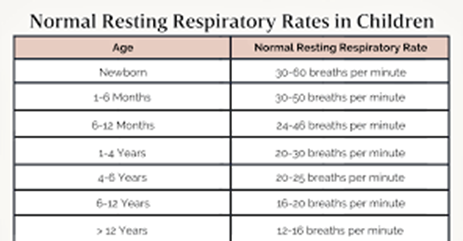
A nurse is assessing a newborn 1 hr after birth. Which of the following respiratory rates is within the expected reference range for a newborn?
A. 110/min
A respiratory rate of 110/min is too high for a newborn and may indicate respiratory distress.
B. 100/min
A respiratory rate of 100/min is too high for a newborn and may indicate respiratory distress.
C. 22/min
A respiratory rate of 22/min is too low for a newborn.
D. 48/min
A normal respiratory rate for a newborn is between 40 and 60 breaths per minute.
Full Explanation
A. A respiratory rate of 110/min is too high for a newborn and may indicate respiratory distress.
B. A respiratory rate of 100/min is too high for a newborn and may indicate respiratory distress.
C. A respiratory rate of 22/min is too low for a newborn.
D. A normal respiratory rate for a newborn is between 40 and 60 breaths per minute.