Nursing practice questions with comprehensive rationales
NurseDive Free Nursing Practice Question
A nurse recently hired to the preoperative area learns that certain patients are at higher risk for venous thromboembolism (VTE). Which patients are considered to be at high risk? (Select all that apply.)
A. Morbidly obese patient
Morbidly obese patient: Obesity is a known risk factor for VTE due to several reasons. Morbidly obese individuals often have impaired mobility, which can lead to venous stasis (sluggish blood flow in the veins). Additionally, obesity is associated with inflammation and changes in blood clotting factors, increasing the risk of developing blood clots in the veins.
B. A woman who smokes and takes oral contraceptives or smoke
A woman who smokes and takes oral contraceptives or smokes: Both smoking and oral contraceptive use are independent risk factors for VTE. Smoking can cause damage to blood vessels and alter blood clotting mechanisms, while oral contraceptives can increase the risk of blood clots due to hormonal changes.
C. Wheelchair-bound patient
Wheelchair-bound patient: While being wheelchair-bound alone may not always indicate a high risk for VTE, immobility is a significant risk factor for developing blood clots. Prolonged periods of immobility can lead to blood stasis in the veins, making wheelchair-bound patients susceptible to VTE, especially if other risk factors are present.
D. Patient with a humerus fracture
Patient with a humerus fracture: A humerus fracture on its own may not necessarily increase the risk of VTE significantly. However, if the fracture requires immobilization or surgery, especially if it affects the lower extremities or leads to prolonged immobility, the risk of VTE can increase due to decreased blood flow and stasis.
E. Patient who underwent a prolonged surgical procedure
Prolonged surgical procedures often involve anesthesia, immobility during surgery, and postoperative immobilization, all of which can contribute to venous stasis and increase the risk of developing VTE. Additionally, the surgical trauma itself can trigger inflammatory responses and alterations in blood clotting factors, further elevating the risk of blood clots.
This question is an excerpt from Nurse Dive's nursing test bank - Ati Lpn Med Surg Cohort 6 Proctored Exam. Take the full exam now
Full Explanation
A. Morbidly obese patient: Obesity is a known risk factor for VTE due to several reasons. Morbidly obese individuals often have impaired mobility, which can lead to venous stasis (sluggish blood flow in the veins). Additionally, obesity is associated with inflammation and changes in blood clotting factors, increasing the risk of developing blood clots in the veins.
B. A woman who smokes and takes oral contraceptives or smokes: Both smoking and oral contraceptive use are independent risk factors for VTE. Smoking can cause damage to blood vessels and alter blood clotting mechanisms, while oral contraceptives can increase the risk of blood clots due to hormonal changes.
C. Wheelchair-bound patient: While being wheelchair-bound alone may not always indicate a high risk for VTE, immobility is a significant risk factor for developing blood clots. Prolonged periods of immobility can lead to blood stasis in the veins, making wheelchair-bound patients susceptible to VTE, especially if other risk factors are present.
D. Patient with a humerus fracture: A humerus fracture on its own may not necessarily increase the risk of VTE significantly. However, if the fracture requires immobilization or surgery, especially if it affects the lower extremities or leads to prolonged immobility, the risk of VTE can increase due to decreased blood flow and stasis.
E. Patient who underwent a prolonged surgical procedure: Prolonged surgical procedures often involve anesthesia, immobility during surgery, and postoperative immobilization, all of which can contribute to venous stasis and increase the risk of developing VTE. Additionally, the surgical trauma itself can trigger inflammatory responses and alterations in blood clotting factors, further elevating the risk of blood clots.
Similar Questions
A nurse is giving a preoperative patient a dose of famotidine ( Pepcid). The patient asks why the nurse is giving this drug when the patient has no history of ulcers. What response by the nurse is best?
A. “All preoperative patients get this medication."
“All preoperative patients get this medication.” This statement is too broad and not entirely accurate. While many preoperative patients do receive famotidine (Pepcid), it’s not a standard for all. Medications are prescribed based on individual patient needs and medical history.
B. “The physician prescribed this medication for you."
“The physician prescribed this medication for you.” While this is technically true, it doesn’t provide the patient with an understanding of why the medication is necessary. As a nurse, part of your role is to educate patients about their medications.
C. "It helps present ulcers from the stress of the surgery."
“It helps prevent ulcers from the stress of the surgery.” This is the correct answer. Famotidine (Pepcid) is given to decrease the amount of acid produced in the stomach, which can help prevent stress ulcers that can occur due to the physical stress of surgery.
D. “Since you don't have ulcers, I will have to ask."
“Since you don’t have ulcers, I will have to ask.” This statement suggests uncertainty and a lack of knowledge about the medication’s purpose. It’s important for healthcare professionals to understand the medications they administer and be able to explain them to patients.
Full Explanation
A. “All preoperative patients get this medication.” This statement is too broad and not entirely accurate. While many preoperative patients do receive famotidine (Pepcid), it’s not a standard for all. Medications are prescribed based on individual patient needs and medical history.
B. “The physician prescribed this medication for you.” While this is technically true, it doesn’t provide the patient with an understanding of why the medication is necessary. As a nurse, part of your role is to educate patients about their medications.
C. “It helps prevent ulcers from the stress of the surgery.” This is the correct answer. Famotidine (Pepcid) is given to decrease the amount of acid produced in the stomach, which can help prevent stress ulcers that can occur due to the physical stress of surgery.
D. “Since you don’t have ulcers, I will have to ask.” This statement suggests uncertainty and a lack of knowledge about the medication’s purpose. It’s important for healthcare professionals to understand the medications they administer and be able to explain them to patients.
A nurse is caring for a client with a new skin inflammation on the chest. Which of the following is an important assessment question to ask the client?
A. How many people live in your home?
How many people live in your home?This question pertains to social and environmental factors but is not directly related to assessing skin inflammation on the chest. While social factors can impact overall health, such as stress levels or exposure to infectious agents, the number of people living in the client's home is unlikely to be directly related to a new skin inflammation unless there are specific circumstances, such as sharing personal care products or close contact with others who have similar skin issues.
B. Did you have a recent exposure to Irritants?
Did you have a recent exposure to irritants?This question is highly relevant to assessing a new skin inflammation on the chest. Exposure to irritants or allergens can trigger or worsen skin conditions, such as contact dermatitis or allergic reactions. By asking about recent exposure to potential irritants like new detergents, soaps, fabrics, chemicals, or environmental factors, the nurse can gather important information to identify possible triggers for the skin inflammation.
C. Is nausea associated with your rash7
Is nausea associated with your rash? Nausea is typically not directly associated with a skin rash or inflammation unless there is a systemic condition or allergic reaction causing both symptoms. While it's important to assess for any systemic signs or symptoms that may be related to the skin condition, such as fever or malaise, specifically asking about nausea may not provide relevant information about the skin inflammation on the chest.
D. What is your body mass index?
What is your body mass index?Body mass index (BMI) is a measure of body weight relative to height and is not directly related to assessing a new skin inflammation on the chest. While obesity or changes in body weight can sometimes contribute to skin issues, such as friction-related dermatitis or hormonal changes affecting skin health, BMI alone is not a primary assessment parameter for localized skin conditions unless there are specific concerns related to weight-related skin problems.
Full Explanation
-
A. How many people live in your home?
This question pertains to social and environmental factors but is not directly related to assessing skin inflammation on the chest. While social factors can impact overall health, such as stress levels or exposure to infectious agents, the number of people living in the client's home is unlikely to be directly related to a new skin inflammation unless there are specific circumstances, such as sharing personal care products or close contact with others who have similar skin issues.
B. Did you have a recent exposure to irritants?
This question is highly relevant to assessing a new skin inflammation on the chest. Exposure to irritants or allergens can trigger or worsen skin conditions, such as contact dermatitis or allergic reactions. By asking about recent exposure to potential irritants like new detergents, soaps, fabrics, chemicals, or environmental factors, the nurse can gather important information to identify possible triggers for the skin inflammation.
C. Is nausea associated with your rash?
Nausea is typically not directly associated with a skin rash or inflammation unless there is a systemic condition or allergic reaction causing both symptoms. While it's important to assess for any systemic signs or symptoms that may be related to the skin condition, such as fever or malaise, specifically asking about nausea may not provide relevant information about the skin inflammation on the chest.
D. What is your body mass index?
Body mass index (BMI) is a measure of body weight relative to height and is not directly related to assessing a new skin inflammation on the chest. While obesity or changes in body weight can sometimes contribute to skin issues, such as friction-related dermatitis or hormonal changes affecting skin health, BMI alone is not a primary assessment parameter for localized skin conditions unless there are specific concerns related to weight-related skin problems.
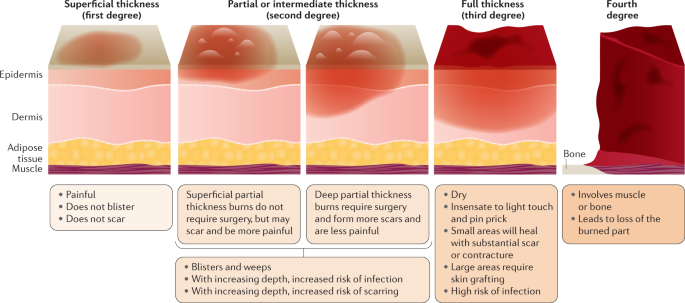
A nurse is providing education to a community group about burn prevention. Which of the following is an example of a first-degree burn?
A. Excessive scarring
Excessive scarring:Excessive scarring is not an example of a first-degree burn. It typically occurs in more severe burns that affect deeper layers of the skin, such as second-degree or third-degree burns. Second-degree burns extend into the dermis, while third-degree burns damage all layers of the skin and can lead to significant scarring. First-degree burns, on the other hand, only affect the outer layer of the skin (epidermis) and usually do not result in excessive scarring.
B. Blistering from flames
Blistering from flames:Blistering from flames is more characteristic of a second-degree burn rather than a first-degree burn. Second-degree burns involve damage to both the epidermis and part of the dermis, which can result in blister formation. These burns are often caused by direct contact with flames, hot liquids, or steam.
C. Blackened dead skin
Blackened dead skin: Blackened dead skin is indicative of a third-degree burn, which is the most severe type of burn. Third-degree burns damage all layers of the skin, including the epidermis, dermis, and sometimes underlying tissues. The skin may appear charred or blackened, and these burns often require medical intervention, such as skin grafting, due to the extent of tissue damage.
D. A sunburn
A sunburn:A sunburn is an example of a first-degree burn. It occurs due to overexposure to ultraviolet (UV) radiation from the sun, leading to redness, pain, and mild swelling of the skin. First-degree burns affect only the outer layer of the skin (epidermis) and typically heal within a few days without significant scarring or blistering. Applying soothing lotions, staying hydrated, and avoiding further sun exposure can help manage sunburns.
Full Explanation
A. Excessive scarring:
Excessive scarring is not an example of a first-degree burn. It typically occurs in more severe burns that affect deeper layers of the skin, such as second-degree or third-degree burns. Second-degree burns extend into the dermis, while third-degree burns damage all layers of the skin and can lead to significant scarring. First-degree burns, on the other hand, only affect the outer layer of the skin (epidermis) and usually do not result in excessive scarring.
B. Blistering from flames:
Blistering from flames is more characteristic of a second-degree burn rather than a first-degree burn. Second-degree burns involve damage to both the epidermis and part of the dermis, which can result in blister formation. These burns are often caused by direct contact with flames, hot liquids, or steam.
C. Blackened dead skin:
Blackened dead skin is indicative of a third-degree burn, which is the most severe type of burn. Third-degree burns damage all layers of the skin, including the epidermis, dermis, and sometimes underlying tissues. The skin may appear charred or blackened, and these burns often require medical intervention, such as skin grafting, due to the extent of tissue damage.
D. A sunburn:
A sunburn is an example of a first-degree burn. It occurs due to overexposure to ultraviolet (UV) radiation from the sun, leading to redness, pain, and mild swelling of the skin. First-degree burns affect only the outer layer of the skin (epidermis) and typically heal within a few days without significant scarring or blistering. Applying soothing lotions, staying hydrated, and avoiding further sun exposure can help manage sunburns.