Nursing practice questions with comprehensive rationales
NurseDive Free Nursing Practice Question
A patient is admitted to the hospital with SOB. The nurse notices increasing confusion and combativeness during the past hour. Which of the following actions is appropriate first?
A. Assess the patient; check to see if the oxygen is flowing correctly
Assess the patient; check to see if the oxygen is flowing correctly:This option involves assessing the patient's condition promptly, particularly focusing on the adequacy of oxygenation. Checking the oxygen delivery system ensures that the patient is receiving the prescribed oxygen therapy at the appropriate flow rate. In a patient with shortness of breath (SOB) and increasing confusion and combativeness, hypoxemia (low oxygen levels) could be a contributing factor. Therefore, assessing the oxygen delivery system is crucial to ensure proper oxygenation and address potential causes of the patient's symptoms.
B. Page the MD STAT
Page the MD STAT:Paging the MD STAT may be necessary after assessing the patient's condition, especially if the patient's symptoms indicate a medical emergency or require immediate intervention. However, in this scenario, the priority is to assess the patient's condition and address any immediate concerns related to oxygenation and respiratory status. While paging the healthcare provider may be necessary, it should not delay the initial assessment and interventions needed to stabilize the patient.
C. Put up the patient's side rails and apply soft restraints
Put up the patient's side rails and apply soft restraints: Applying side rails and soft restraints should not be the first action in response to the patient's symptoms. While patient safety is important, these measures should only be implemented after other interventions have been attempted, and there is a risk of harm to the patient or others due to agitation or combativeness. In this case, the patient's confusion and combativeness may be secondary to hypoxemia, so addressing oxygenation and assessing the patient's condition are the immediate priorities.
D. Administer an IM sedative
Administer an IM sedative:Administering a sedative should not be the first action in this scenario. Sedation may be considered if the patient's agitation or combativeness poses a risk to their safety or interferes with assessment and treatment. However, the underlying cause of the patient's symptoms, such as hypoxemia, should be addressed first. Administering a sedative without addressing the potential cause of the patient's symptoms could mask important clinical indicators and delay appropriate treatment.
This question is an excerpt from Nurse Dive's nursing test bank - Ati Med Surg Respiratory Test Polizzoti Proctored Exam. Take the full exam now
Full Explanation
A. Assess the patient; check to see if the oxygen is flowing correctly:
This option involves assessing the patient's condition promptly, particularly focusing on the adequacy of oxygenation. Checking the oxygen delivery system ensures that the patient is receiving the prescribed oxygen therapy at the appropriate flow rate. In a patient with shortness of breath (SOB) and increasing confusion and combativeness, hypoxemia (low oxygen levels) could be a contributing factor. Therefore, assessing the oxygen delivery system is crucial to ensure proper oxygenation and address potential causes of the patient's symptoms.
B. Page the MD STAT:
Paging the MD STAT may be necessary after assessing the patient's condition, especially if the patient's symptoms indicate a medical emergency or require immediate intervention. However, in this scenario, the priority is to assess the patient's condition and address any immediate concerns related to oxygenation and respiratory status. While paging the healthcare provider may be necessary, it should not delay the initial assessment and interventions needed to stabilize the patient.
C. Put up the patient's side rails and apply soft restraints:
Applying side rails and soft restraints should not be the first action in response to the patient's symptoms. While patient safety is important, these measures should only be implemented after other interventions have been attempted, and there is a risk of harm to the patient or others due to agitation or combativeness. In this case, the patient's confusion and combativeness may be secondary to hypoxemia, so addressing oxygenation and assessing the patient's condition are the immediate priorities.
D. Administer an IM sedative:
Administering a sedative should not be the first action in this scenario. Sedation may be considered if the patient's agitation or combativeness poses a risk to their safety or interferes with assessment and treatment. However, the underlying cause of the patient's symptoms, such as hypoxemia, should be addressed first. Administering a sedative without addressing the potential cause of the patient's symptoms could mask important clinical indicators and delay appropriate treatment.
Similar Questions
A patient has a diagnosis of Impaired Gas Exchange. Which assessment finding shows that the interventions have been effective?
A. The patient's Spo2 is 97% on 2L NC
The patient's Spo2 is 97% on 2L NC:This assessment finding indicates that the patient's oxygen saturation level (SpO2) is 97% while receiving 2 liters per minute of oxygen via nasal cannula. Oxygen saturation is a measure of the percentage of hemoglobin saturated with oxygen in the blood. A SpO2 level of 97% suggests adequate oxygenation, which is essential for effective gas exchange. Therefore, if the patient's SpO2 is within the target range on the prescribed oxygen therapy, it indicates that the interventions aimed at improving gas exchange have been effective.
B. The patient appears comfortable
The patient appears comfortable:While patient comfort is important, it is not a direct indicator of effective gas exchange. A patient may appear comfortable for various reasons, such as pain relief, proper positioning, or emotional support, but this does not necessarily reflect improved gas exchange. Therefore, while comfort is an important aspect of nursing care, it is not specifically indicative of the effectiveness of interventions for impaired gas exchange.
C. The patient is coughing up copious white sputum
The patient is coughing up copious white sputum: The presence of copious white sputum does not directly indicate improved gas exchange. White sputum may suggest various conditions, such as respiratory tract infections or inflammation, but it does not provide direct information about gas exchange efficiency. Effective gas exchange involves the exchange of oxygen and carbon dioxide at the alveolar-capillary membrane, which cannot be assessed solely based on sputum production.
D. The patient is able to move out of bed without difficulty
The patient is able to move out of bed without difficulty:The ability to move out of bed without difficulty may indicate improved overall physical function or mobility, but it does not specifically reflect improved gas exchange. Gas exchange primarily involves the transfer of oxygen from the alveoli into the bloodstream and the removal of carbon dioxide from the bloodstream into the alveoli for exhalation. While improved gas exchange may lead to enhanced physical endurance and reduced dyspnea, the ability to move out of bed without difficulty is not a direct measure of gas exchange efficiency.
Full Explanation
A. The patient's Spo2 is 97% on 2L NC:
This assessment finding indicates that the patient's oxygen saturation level (SpO2) is 97% while receiving 2 liters per minute of oxygen via nasal cannula. Oxygen saturation is a measure of the percentage of hemoglobin saturated with oxygen in the blood. A SpO2 level of 97% suggests adequate oxygenation, which is essential for effective gas exchange. Therefore, if the patient's SpO2 is within the target range on the prescribed oxygen therapy, it indicates that the interventions aimed at improving gas exchange have been effective.
B. The patient appears comfortable:
While patient comfort is important, it is not a direct indicator of effective gas exchange. A patient may appear comfortable for various reasons, such as pain relief, proper positioning, or emotional support, but this does not necessarily reflect improved gas exchange. Therefore, while comfort is an important aspect of nursing care, it is not specifically indicative of the effectiveness of interventions for impaired gas exchange.
C. The patient is coughing up copious white sputum:
The presence of copious white sputum does not directly indicate improved gas exchange. White sputum may suggest various conditions, such as respiratory tract infections or inflammation, but it does not provide direct information about gas exchange efficiency. Effective gas exchange involves the exchange of oxygen and carbon dioxide at the alveolar-capillary membrane, which cannot be assessed solely based on sputum production.
D. The patient is able to move out of bed without difficulty:
The ability to move out of bed without difficulty may indicate improved overall physical function or mobility, but it does not specifically reflect improved gas exchange. Gas exchange primarily involves the transfer of oxygen from the alveoli into the bloodstream and the removal of carbon dioxide from the bloodstream into the alveoli for exhalation. While improved gas exchange may lead to enhanced physical endurance and reduced dyspnea, the ability to move out of bed without difficulty is not a direct measure of gas exchange efficiency.
What is albuterol (Proventil) used to treat?
A. Acute bronchospasm
Acute bronchospasm:Albuterol (Proventil) is commonly used to treat acute bronchospasm, which is characterized by sudden constriction of the muscles surrounding the airways. This constriction leads to narrowing of the air passages, making it difficult to breathe. Albuterol works as a bronchodilator by relaxing these muscles, thereby opening up the airways and relieving symptoms such as wheezing, shortness of breath, and chest tightness. It is commonly used to manage conditions such as asthma, chronic obstructive pulmonary disease (COPD), and bronchitis, where bronchospasm is a prominent feature.
B. Acute allergies
Acute allergies:Albuterol (Proventil) is not typically used to treat acute allergies. While it can help alleviate symptoms such as wheezing and shortness of breath that may occur as a result of allergic reactions affecting the airways, its primary indication is for bronchospasm associated with respiratory conditions like asthma and COPD. Antihistamines and corticosteroids are more commonly used to manage allergic reactions and their associated symptoms.
C. Nasal congestion
Nasal congestion: Albuterol (Proventil) is not indicated for the treatment of nasal congestion. Nasal congestion primarily involves swelling and inflammation of the nasal passages, which are not directly affected by albuterol. Decongestants such as pseudoephedrine or nasal corticosteroids are typically used to relieve nasal congestion by reducing inflammation and swelling in the nasal passages.
D. Dyspnea on exertion
Dyspnea on exertion:Albuterol (Proventil) may help alleviate dyspnea (shortness of breath) on exertion, particularly if it is caused by bronchospasm or exercise-induced bronchoconstriction. By relaxing the muscles around the airways, albuterol can improve airflow and ease breathing difficulties associated with exertion. However, it is important to note that albuterol is primarily indicated for the treatment of acute bronchospasm rather than dyspnea on exertion unrelated to bronchospasm. Other interventions, such as oxygen therapy or addressing underlying cardiovascular conditions, may be necessary to manage dyspnea on exertion in those cases.
Full Explanation
A. Acute bronchospasm:
Albuterol (Proventil) is commonly used to treat acute bronchospasm, which is characterized by sudden constriction of the muscles surrounding the airways. This constriction leads to narrowing of the air passages, making it difficult to breathe. Albuterol works as a bronchodilator by relaxing these muscles, thereby opening up the airways and relieving symptoms such as wheezing, shortness of breath, and chest tightness. It is commonly used to manage conditions such as asthma, chronic obstructive pulmonary disease (COPD), and bronchitis, where bronchospasm is a prominent feature.
B. Acute allergies:
Albuterol (Proventil) is not typically used to treat acute allergies. While it can help alleviate symptoms such as wheezing and shortness of breath that may occur as a result of allergic reactions affecting the airways, its primary indication is for bronchospasm associated with respiratory conditions like asthma and COPD. Antihistamines and corticosteroids are more commonly used to manage allergic reactions and their associated symptoms.
C. Nasal congestion:
Albuterol (Proventil) is not indicated for the treatment of nasal congestion. Nasal congestion primarily involves swelling and inflammation of the nasal passages, which are not directly affected by albuterol. Decongestants such as pseudoephedrine or nasal corticosteroids are typically used to relieve nasal congestion by reducing inflammation and swelling in the nasal passages.
D. Dyspnea on exertion:
Albuterol (Proventil) may help alleviate dyspnea (shortness of breath) on exertion, particularly if it is caused by bronchospasm or exercise-induced bronchoconstriction. By relaxing the muscles around the airways, albuterol can improve airflow and ease breathing difficulties associated with exertion. However, it is important to note that albuterol is primarily indicated for the treatment of acute bronchospasm rather than dyspnea on exertion unrelated to bronchospasm. Other interventions, such as oxygen therapy or addressing underlying cardiovascular conditions, may be necessary to manage dyspnea on exertion in those cases.
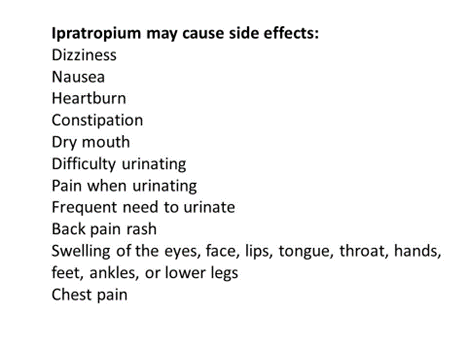
The nurse is providing instruction about ipratropium (Atrovent) to a patient with COPD. Which is a common adverse effect that tends to resolve with therapy?
A. Dry mouth
Dry mouthDry mouth is a common adverse effect of ipratropium (Atrovent) due to its anticholinergic properties. Anticholinergic medications can inhibit saliva production, leading to a sensation of dryness in the mouth. While uncomfortable, dry mouth tends to improve over time as the body adjusts to the medication. Patients can manage dry mouth by increasing fluid intake and practicing good oral hygiene.
B. Anxiety
AnxietyAnxiety is not a common adverse effect of ipratropium (Atrovent). While some individuals may experience anxiety as a side effect of certain medications, it is not typically associated with ipratropium. If a patient experiences anxiety while taking ipratropium, it is essential to assess whether it may be related to other factors or medications and to consult a healthcare provider for appropriate management.
C. Tachycardia
Tachycardia Tachycardia (rapid heart rate) is not a common adverse effect of ipratropium (Atrovent). While ipratropium is an anticholinergic medication that can affect heart rate in some individuals, tachycardia is not typically reported as a common side effect. However, patients should be monitored for changes in heart rate and other cardiovascular effects while taking ipratropium, especially if they have pre-existing cardiac conditions.
D. Urine retention
Urine retentionUrinary retention is a potential adverse effect of ipratropium (Atrovent) due to its anticholinergic properties. Anticholinergic medications can relax the smooth muscle of the bladder, leading to difficulty emptying the bladder completely. However, urinary retention is less common with ipratropium compared to other anticholinergic medications, such as those used to treat overactive bladder. Patients experiencing urinary retention while taking ipratropium should consult their healthcare provider for further evaluation and management.
Full Explanation
A. Dry mouth
Dry mouth is a common adverse effect of ipratropium (Atrovent) due to its anticholinergic properties. Anticholinergic medications can inhibit saliva production, leading to a sensation of dryness in the mouth. While uncomfortable, dry mouth tends to improve over time as the body adjusts to the medication. Patients can manage dry mouth by increasing fluid intake and practicing good oral hygiene.
B. Anxiety
Anxiety is not a common adverse effect of ipratropium (Atrovent). While some individuals may experience anxiety as a side effect of certain medications, it is not typically associated with ipratropium. If a patient experiences anxiety while taking ipratropium, it is essential to assess whether it may be related to other factors or medications and to consult a healthcare provider for appropriate management.
C. Tachycardia
Tachycardia (rapid heart rate) is not a common adverse effect of ipratropium (Atrovent). While ipratropium is an anticholinergic medication that can affect heart rate in some individuals, tachycardia is not typically reported as a common side effect. However, patients should be monitored for changes in heart rate and other cardiovascular effects while taking ipratropium, especially if they have pre-existing cardiac conditions.
D. Urine retention
Urinary retention is a potential adverse effect of ipratropium (Atrovent) due to its anticholinergic properties. Anticholinergic medications can relax the smooth muscle of the bladder, leading to difficulty emptying the bladder completely. However, urinary retention is less common with ipratropium compared to other anticholinergic medications, such as those used to treat overactive bladder. Patients experiencing urinary retention while taking ipratropium should consult their healthcare provider for further evaluation and management.