Nursing practice questions with comprehensive rationales
NurseDive Free Nursing Practice Question
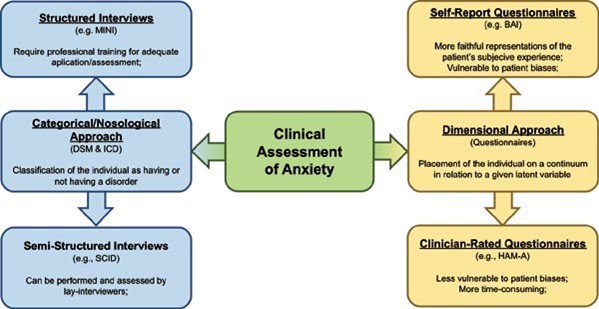
A psychiatric nurse is caring for a young adult client who says he is experiencing increased anxiety and an inability to concentrate. Which of the following responses should the nurse make?
A. "Have you talked to your friends about this yet?"
Option a "Have you talked to your friends about this yet?" may not be an appropriate response, as the client may need more professional support than what their friends can provide.
B. "I have problems too, everybody has problems."
Option b "I have problems too, everybody has problems" may be dismissive of the client's concerns and may not help them feel heard or understood.
C. "How long has this been going on?
This response acknowledges the client's concerns and invites further discussion about their experience. The nurse can use this information to assess the severity and duration of the client's symptoms, as well as any potential triggers or stressors that may be contributing to their anxiety and inability to concentrate.
D. "Have you talked to your parents about this yet?
Option d "Have you talked to your parents about this yet?" may not be an appropriate response, as the client may not feel comfortable discussing their concerns with their parents or may need more professional support than what their parents can provide.
This question is an excerpt from Nurse Dive's nursing test bank - Mental Health - Proctored Exam 2. Take the full exam now
Full Explanation
This response acknowledges the client's concerns and invites further discussion about their experience. The nurse can use this information to assess the severity and duration of the client's symptoms, as well as any potential triggers or stressors that may be contributing to their anxiety and inability to concentrate.
Option a "Have you talked to your friends about this yet?" may not be an appropriate response, as the client may need more professional support than what their friends can provide.
Option b "I have problems too, everybody has problems" may be dismissive of the client's concerns and may not help them feel heard or understood.
Option d "Have you talked to your parents about this yet?" may not be an appropriate response, as the client may not feel comfortable discussing their concerns with their parents or may need more professional support than what their parents can provide.
Option e "Why do you think you are so anxious?" may be seen as confrontational and may not help the client feel heard or understood.
Option f "It sounds like you're having a difficult time" acknowledges the client's concerns but does not invite further discussion or provide an opportunity for the nurse to gather more information.
Similar Questions
A supervisor assigns a worker a new project. The worker initially agrees but feels resentful. The next day. when asked about the project worker says, “I've been working on Other things."
When asked 4 hours later, the worker says, "Someone else was using the copy machine, so I couldn’t finish it."
The worker's behavior demonstrates:
A. Passive aggression
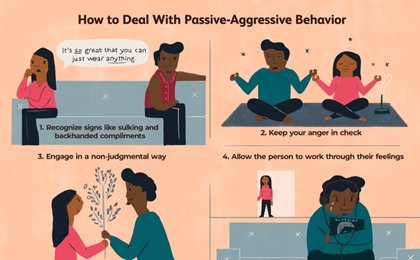
Passive-aggressive behavior is characterized by indirect resistance to the demands of others and an avoidance of direct confrontation. In this case, the worker is demonstrating passive-aggressive behavior by initially agreeing to the project but then making excuses and not completing it.
B. Repression
C. Sublimation
D. Reaction formation
Full Explanation
Passive-aggressive behavior is characterized by indirect resistance to the demands of others and an avoidance of direct confrontation. In this case, the worker is demonstrating passive-aggressive behavior by initially agreeing to the project but then making excuses and not completing it.
A new client is diagnosed with agoraphobia. Which of the following would the healthcare identify as a characteristic of this disorder?
Select one:
A. Fear Of using public transportation
Agoraphobia is an anxiety disorder characterized by the fear or avoidance of situations or places where escape might be difficult or help may not be available in the event of a panic attack or other distressing symptom. Individuals with agoraphobia may have intense anxiety or panic symptoms in places such as crowded areas, enclosed spaces, public transportation, open spaces, or places far away from home.
B. Avoids interacting with strangers and speaking in public
Option b refers to social anxiety disorder.
C. Avoids being in the presence of spiders
Option c refers to specific phobia.
D. Refuses to use a public restroom because Of the virus, fungus, and bacteria
Option d refers to obsessive-compulsive disorder.
Full Explanation
Agoraphobia is an anxiety disorder characterized by the fear or avoidance of situations or places where escape might be difficult or help may not be available in the event of a panic attack or other distressing symptom. Individuals with agoraphobia may have intense anxiety or panic symptoms in places such as crowded areas, enclosed spaces, public transportation, open spaces, or places far away from home.
Option b refers to social anxiety disorder.
Option c refers to specific phobia.
Option d refers to obsessive-compulsive disorder.

Which nursing intervention has priority as a patient diagnosed with anorexia nervosa begins to gain weight after initiating therapy?
Select one:
A. Assess for depression and anxiety every shift
B. Communicate empathy for the patient's feelings to increase rapport
C. Help the patient balance energy expenditure and caloric intake.
D. Observe for adverse effects of refeeding.
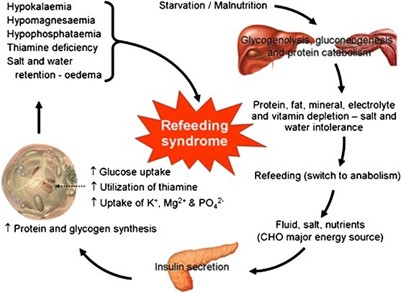
Refeeding syndrome is a potentially life-threatening condition that can occur when a person with anorexia nervosa begins to eat again after a period of starvation. It is important for the nurse to closely monitor the patient for signs of refeeding syndrome, such as electrolyte imbalances and fluid overload, as the patient begins to gain weight.
Full Explanation
Refeeding syndrome is a potentially life-threatening condition that can occur when a person with anorexia nervosa begins to eat again after a period of starvation. It is important for the nurse to closely monitor the patient for signs of refeeding syndrome, such as electrolyte imbalances and fluid overload, as the patient begins to gain weight.