
Nursing practice questions with comprehensive rationales
NurseDive Free Nursing Practice Question
After having a pulmonary angiogram, a client is diagnosed with a pulmonary embolism (PE). Which intervention is most important for the nurse to include in the client's plan of care?
A. Administer IV opioids as needed for pain.
While pain management is important, it is not the most critical intervention compared to monitoring for bleeding, which can be life-threatening.
B. Teach how to use incentive spirometry.
Teaching the client how to use incentive spirometry is important for improving lung function and preventing complications like atelectasis. However, in the context of a pulmonary embolism (PE), the immediate priority is to monitor for signs of increased bleeding due to the anticoagulant or thrombolytic therapy often used to treat PE. This is crucial to prevent potentially life-threatening complications.
C. Monitor for confusion and restlessness.
Confusion and restlessness could indicate hypoxia, which is important to monitor in a PE patient. However, the immediate risk of bleeding due to anticoagulation therapy takes precedence.
D. Observe for signs of increased bleeding.
Patients with a pulmonary embolism are typically treated with thrombolytic or anticoagulant therapy to prevent further clot formation and to help dissolve the existing clot. Anticoagulants significantly increase the risk of bleeding, making it crucial to monitor for signs of increased bleeding as a priority in the plan of care.
This question is an excerpt from Nurse Dive's nursing test bank - RN Hesi Exit Proctored Exam. Take the full exam now
Full Explanation
A. While pain management is important, it is not the most critical intervention compared to monitoring for bleeding, which can be life-threatening.
B. Teaching the client how to use incentive spirometry is important for improving lung function and preventing complications like atelectasis. However, in the context of a pulmonary embolism (PE), the immediate priority is to monitor for signs of increased bleeding due to the anticoagulant or thrombolytic therapy often used to treat PE. This is crucial to prevent potentially life-threatening complications.
C. Confusion and restlessness could indicate hypoxia, which is important to monitor in a PE patient. However, the immediate risk of bleeding due to anticoagulation therapy takes precedence.
D. Patients with a pulmonary embolism are typically treated with thrombolytic or anticoagulant therapy to prevent further clot formation and to help dissolve the existing clot. Anticoagulants significantly increase the risk of bleeding, making it crucial to monitor for signs of increased bleeding as a priority in the plan of care.
Similar Questions
One hour after arriving on the postoperative unit, a woman who received spinal anesthesia 5 hours ago is complaining of severe abdominal incisional pain. Her vital signs are: temperature 99° F (37.2° C), heart rate 110 beats/minute, respiratory rate 30 breaths/minute and blood pressure 160/90 mmHg. The client's skin is pale, and the surgical dressing is dry and Intact. Which intervention is most important for the nurse to Implement?
A. Provide pillow for splinting.
While providing a pillow for splinting can offer comfort and support to the client, it is not the most critical intervention in this situation.
B. Assess the IV site for patency.
Assessing IV patency is a procedural prerequisite for medication administration but not a therapeutic intervention in itself. It does not directly address the pathophysiology of acute pain or the sympathetic surge evidenced by tachycardia and hypertension. Pain activates ascending pathways via A-delta and C fibers, requiring pharmacologic blockade. IV access assessment is necessary but secondary to the urgent need for analgesia to prevent complications like hypoxia, hyperventilation, or delayed recovery.
C. Place in a high Fowler position.
Placing the client in a high Fowler position may help with pain management, but it is not the priority at this moment.
D. Administer an IV analgesic.
IV analgesics act rapidly to inhibit nociceptive transmission at the spinal cord and brainstem levels. Opioids bind to mu receptors, reducing neurotransmitter release and hyperpolarizing neurons, thereby dampening pain signals. This intervention directly targets the physiologic cause of elevated heart rate, respiratory rate, and blood pressure. Normal heart rate is 60–100 bpm, respiratory rate 12–20 breaths/min, and BP <120/80 mmHg. Prompt analgesia prevents complications like hypoxia, delayed healing, and neuroendocrine stress.
E. None
None
F. None
None
Full Explanation
The correct answer is Choice D
Choice A rationale: Splinting with a pillow may reduce discomfort during movement or coughing by stabilizing the incision site, but it does not address acute postoperative pain with sympathetic overdrive. The elevated heart rate, respiratory rate, and blood pressure suggest a stress response mediated by catecholamines. Without analgesia, nociceptive signals continue to activate the hypothalamic-pituitary-adrenal axis. While splinting is supportive, it lacks the pharmacologic efficacy needed to blunt nociceptive transmission at the spinal or supraspinal level.
Choice B rationale: Assessing IV patency is a procedural prerequisite for medication administration but not a therapeutic intervention in itself. It does not directly address the pathophysiology of acute pain or the sympathetic surge evidenced by tachycardia and hypertension. Pain activates ascending pathways via A-delta and C fibers, requiring pharmacologic blockade. IV access assessment is necessary but secondary to the urgent need for analgesia to prevent complications like hypoxia, hyperventilation, or delayed recovery.
Choice C rationale: High Fowler positioning may improve diaphragmatic excursion and reduce pulmonary complications, but it does not mitigate visceral or incisional pain. In fact, increased intra-abdominal pressure from upright posture may exacerbate pain at the surgical site. Pain perception involves central sensitization and peripheral nociceptor activation, which are unaffected by positioning. The client’s pale skin and elevated vitals indicate systemic distress requiring analgesic intervention, not postural adjustment. Thus, this choice lacks direct analgesic benefit.
Choice D rationale: IV analgesics act rapidly to inhibit nociceptive transmission at the spinal cord and brainstem levels. Opioids bind to mu receptors, reducing neurotransmitter release and hyperpolarizing neurons, thereby dampening pain signals. This intervention directly targets the physiologic cause of elevated heart rate, respiratory rate, and blood pressure. Normal heart rate is 60–100 bpm, respiratory rate 12–20 breaths/min, and BP <120/80 mmHg. Prompt analgesia prevents complications like hypoxia, delayed healing, and neuroendocrine stress
The nurse is preparing to administer a suspension ampicillin labeled, 250 mg/5 mL, to a child with impetigo. The prescription is for 500 mg four times a day. How many mL should the child receive per day?
(Enter numeric value only.)
Full Explanation
To determine the amount of mL the child should receive per day, we need to calculate the total daily dose of ampicillin based on the prescription.
The prescription is for 500 mg of ampicillin four times a day, so the total daily dose is: 500 mg × 4 times = 2000 mg/day
The concentration of the suspension is 250 mg/5 mL, which means that there are 250 mg of ampicillin in every 5 mL.
To find out how many mL the child should receive per day, we divide the total daily dose by the concentration:
2000 mg ÷ 250 mg/5 mL = 40 mL/day
Therefore, the child should receive 40 mL of the ampicillin suspension per day.
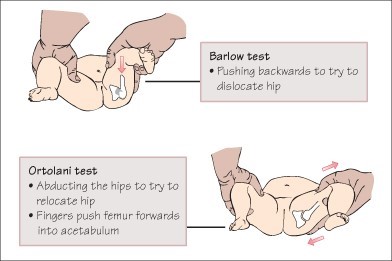
The nurse is performing an admission assessment for a newborn who has asymmetrical buttocks. Which assessment test results should the nurse report to the healthcare provider?
A. Ortolani maneuver causing a click at the hip joint.
The Ortolani maneuver is a physical examination technique used to assess for developmental dysplasia of the hip (DDH) in newborns. During the maneuver, the nurse gently abducts the infant's hips and applies gentle pressure to detect any instability or "click" at the hip joint. A positive Ortolani maneuver, where a click or clunk is felt or heard, can indicate the presence of a hip dislocation or dysplasia. Asymmetrical buttocks can be a sign of hip dysplasia in newborns, and a positive Ortolani maneuver is an important finding that suggests a potential hip joint problem. Reporting this assessment test result to the healthcare provider allows for further evaluation and appropriate management of the newborn's hip condition.
B. Plumb line test indicates fetal position curvature.
The Plumb line test, which assesses fetal position curvature, is not directly related to hip dysplasia and may not be significant in this context.
C. Babinski test that reveals fanning out of toes.
The Babinski test, which reveals fanning out of the toes, is used to assess the integrity of the infant's neurological system and is not specific to hip dysplasia.
D. Moro test precipitating a startle response.
The Moro test, also known as the startle response, is a reflex assessment used to evaluate the newborn's neurological and sensory function. While it is important to assess the overall neurological status of the newborn, the Moro test is not specific to hip dysplasia.
Full Explanation
The Ortolani maneuver is a physical examination technique used to assess for developmental dysplasia of the hip (DDH) in newborns. During the maneuver, the nurse gently abducts the infant's hips and applies gentle pressure to detect any instability or "click" at the hip joint. A positive Ortolani maneuver, where a click or clunk is felt or heard, can indicate the presence of a hip dislocation or dysplasia.
Asymmetrical buttocks can be a sign of hip dysplasia in newborns, and a positive Ortolani maneuver is an important finding that suggests a potential hip joint problem. Reporting this assessment test result to the healthcare provider allows for further evaluation and appropriate management of the newborn's hip condition.
The Plumb line test, which assesses fetal position curvature, is not directly related to hip dysplasia and may not be significant in this context.
The Babinski test, which reveals fanning out of the toes, is used to assess the integrity of the infant's neurological system and is not specific to hip dysplasia.
The Moro test, also known as the startle response, is a reflex assessment used to evaluate the newborn's neurological and sensory function. While it is important to assess the overall neurological status of the newborn, the Moro test is not specific to hip dysplasia.