
Nursing practice questions with comprehensive rationales
NurseDive Free Nursing Practice Question
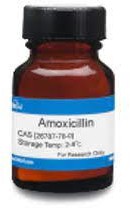
Amoxicillin trihydrate 300 mg oral (PO) has been prescribed for a client with an oral infection. The medication is available in a liquid suspension that is available as 250 mg/5 mL. How many milliliters should the nurse administer?
Record your answer using a whole number.
A. 6
This is the correct answer. It corresponds to 300 mg of the drug ((300x 5)/250).
B. 4
This is incorrect because it is too low. It is the amount of milliliters that corresponds to 200 mg of amoxicillin trihydrate, which is less than the prescribed dose of 300 mg.
C. 1.2
This is incorrect because it is too low. It is the amount of milliliters that corresponds to 60 mg of amoxicillin trihydrate, which is not enough to treat an oral infection.
D. 5
This is incorrect because it is too low. It is the amount of milliliters that corresponds to 250 mg of amoxicillin trihydrate, which is less than the prescribed dose of 300 mg.
This question is an excerpt from Nurse Dive's nursing test bank - Interprofessional Care of the Client and Family Across the Lifespan II Proctored Exam. Take the full exam now
Full Explanation
Choice A rationale: This is the correct answer. It corresponds to 300 mg of the drug ((300x 5)/250).
Choice B rationale: This is incorrect because it is too low. It is the amount of milliliters that corresponds to 200 mg of amoxicillin trihydrate, which is less than the prescribed dose of 300 mg.
Choice C rationale: This is incorrect because it is too low. It is the amount of milliliters that corresponds to 60 mg of amoxicillin trihydrate, which is not enough to treat an oral infection.
Choice D rationale: This is incorrect because it is too low. It is the amount of milliliters that corresponds to 250 mg of amoxicillin trihydrate, which is less than the prescribed dose of 300 mg.
 |
Similar Questions
The nurse is caring for a client who is admitted with a hemorrhagic stroke. Which nursing action should be included in the plan of care?
A. Perform active range of motion three times daily.
Performing active range of motion exercises may not be safe or appropriate immediately following a hemorrhagic stroke.
B. Maintain the head of bed in a flat or 30 degree position.
Maintaining the head of bed flat or at a 30-degree position might be used for ischemic strokes but not necessarily for hemorrhagic strokes.
C. Teach measures to avoid the Valsalva maneuver.
Teaching measures to avoid the Valsalva maneuver (straining during activities like defecation) helps prevent sudden increases in intracranial pressure, which can be detrimental after a hemorrhagic stroke.
D. Monitor for Battle's sign every four hours.
Monitoring for Battle's sign (bruising behind the ears associated with basilar skull fracture) is not relevant in the care of a hemorrhagic stroke.
Full Explanation
Choice A rationale: Performing active range of motion exercises may not be safe or appropriate immediately following a hemorrhagic stroke.
Choice B rationale: Maintaining the head of bed flat or at a 30-degree position might be used for ischemic strokes but not necessarily for hemorrhagic strokes.
Choice C rationale: Teaching measures to avoid the Valsalva maneuver (straining during activities like defecation) helps prevent sudden increases in intracranial pressure, which can be detrimental after a hemorrhagic stroke.
Choice D rationale: Monitoring for Battle's sign (bruising behind the ears associated with basilar skull fracture) is not relevant in the care of a hemorrhagic stroke.
The nurse is taking a history of a newly diagnosed Type 2 diabetic who is beginning treatment. Which subjective information is most important for the nurse to note?
A. An allergy to sulfa drugs.
An allergy to sulfa drugs is important as some diabetes medications, like sulfonylureas, contain components related to sulfa drugs, which could cause an allergic reaction in susceptible individuals.
B. Cessation of smoking three years ago.
Smoking cessation and lifestyle history are important but might not directly impact initial diabetes treatment options.
C. Numbness in the soles of the feet.
Numbness in the soles of the feet might indicate neuropathy, a common complication of diabetes, but is not directly related to the choice of initial treatment.
D. A history of obesity.
While obesity is a risk factor for Type 2 diabetes, it's less critical for immediate treatment decisions compared to drug allergies that could impact medication choices.
Full Explanation
Choice A rationale: An allergy to sulfa drugs is important as some diabetes medications, like sulfonylureas, contain components related to sulfa drugs, which could cause an allergic reaction in susceptible individuals.
Choice B rationale: Smoking cessation and lifestyle history are important but might not directly impact initial diabetes treatment options.
Choice C rationale: Numbness in the soles of the feet might indicate neuropathy, a common complication of diabetes, but is not directly related to the choice of initial treatment.
Choice D rationale: While obesity is a risk factor for Type 2 diabetes, it's less critical for immediate treatment decisions compared to drug allergies that could impact medication choices.
Which assessment finding in a 36-yr-old patient is most indicative of a need for further evaluation?
A. A breast lump that increases in size before the menstrual period.
A breast lump that increases in size before the menstrual period might be related to hormonal changes and is not necessarily indicative of a concerning issue.
B. Bilateral breast nodules that are tender with palpation.
Bilateral breast nodules that are tender with palpation might be related to benign conditions or hormonal changes.
C. A breast lump that is small and mobile, with a rubbery consistency.
A small, mobile, rubbery breast lump could suggest a benign condition like a fibroadenoma, which might not be as concerning.
D. A breast nodule that is 1 cm in size, nontender, and fixed.
A breast nodule that is 1 cm in size, nontender, and fixed could potentially raise concerns about malignancy and requires further evaluation.
Full Explanation
Choice A rationale: A breast lump that increases in size before the menstrual period might be related to hormonal changes and is not necessarily indicative of a concerning issue.
Choice B rationale: Bilateral breast nodules that are tender with palpation might be related to benign conditions or hormonal changes.
Choice C rationale: A small, mobile, rubbery breast lump could suggest a benign condition like a fibroadenoma, which might not be as concerning.
Choice D rationale: A breast nodule that is 1 cm in size, nontender, and fixed could potentially raise concerns about malignancy and requires further evaluation.