Nursing practice questions with comprehensive rationales
NurseDive Free Nursing Practice Question
An older woman who has difficulty hearing is being discharged from day surgery following a cataract extraction and lens implantation. Which intervention is most important for the nurse to implement to help ensure the client's compliance with self-care?
A. Have the client vocalize the instructions provided.
Having the client vocalize the instructions provided ensures that they have understood the information correctly. This method allows the nurse to confirm comprehension and clarify any misunderstandings.
B. Provide written instructions for eye drop administration.
Providing written instructions for eye drop administration is helpful but does not ensure that the client understands the instructions. It is a good supplementary measure but should not be the sole method of communication.
C. Speak clearly and face the client for lip reading.
Speaking clearly and facing the client for lip reading is important, especially for clients with hearing impairments. However, it does not guarantee that the client has understood the instructions.
D. Ensure that someone will stay with the client for 24 hours.
Ensuring that someone will stay with the client for 24 hours is a good safety measure but does not directly address the client’s understanding of the discharge instructions.
This question is an excerpt from Nurse Dive's nursing test bank - RN Hesi Exit Proctored Exam. Take the full exam now
Full Explanation
The correct answer is choice A.
Choice A rationale:
Having the client vocalize the instructions provided ensures that they have understood the information correctly. This method allows the nurse to confirm comprehension and clarify any misunderstandings.
Choice B rationale:
Providing written instructions for eye drop administration is helpful but does not ensure that the client understands the instructions. It is a good supplementary measure but should not be the sole method of communication.
Choice C rationale:
Speaking clearly and facing the client for lip reading is important, especially for clients with hearing impairments. However, it does not guarantee that the client has understood the instructions.
Choice D rationale:
Ensuring that someone will stay with the client for 24 hours is a good safety measure but does not directly address the client’s understanding of the discharge instructions.
Similar Questions
An older adult client is admitted to the stroke unit after recovery from the acute phrase of an ischemic cerebral vascular accident (CVA). Which intervention(s) should the nurse include in the plan of care during convalescence and rehabilitation? (Select all that apply.)
A. Place a bedside commode next to bed.
Placing a bedside commode next to the bed helps prevent falls and promotes independence in toileting, which is crucial for stroke patients who may have mobility issues.
B. Measure neurological vital signs every 4 hours.
Measuring neurological vital signs every 4 hours is essential to monitor for any changes in the patient’s condition, which can help in early detection of complications.
C. Suction oral cavity every 4 hours.
Suctioning the oral cavity every 4 hours is not typically necessary unless the patient has specific issues with swallowing or secretion management. Routine suctioning can also cause discomfort and potential injury.
D. Encourage family to participate in the client's care.
Encouraging family to participate in the client’s care provides emotional support and helps in the rehabilitation process. Family involvement can improve the patient’s motivation and adherence to the rehabilitation plan.
E. Play classical music in room while client is
Playing classical music in the room can be soothing and beneficial for some patients, but it is not a standard intervention for stroke rehabilitation. The effectiveness of music therapy can vary based on individual preferences.
Full Explanation
The correct answer is a. Place a bedside commode next to bed., b. Measure neurological vital signs every 4 hours., d. Encourage family to participate in the client’s care.
Choice A rationale:
Placing a bedside commode next to the bed helps prevent falls and promotes independence in toileting, which is crucial for stroke patients who may have mobility issues.
Choice B rationale:
Measuring neurological vital signs every 4 hours is essential to monitor for any changes in the patient’s condition, which can help in early detection of complications.
Choice C rationale:
Suctioning the oral cavity every 4 hours is not typically necessary unless the patient has specific issues with swallowing or secretion management. Routine suctioning can also cause discomfort and potential injury.
Choice D rationale:
Encouraging family to participate in the client’s care provides emotional support and helps in the rehabilitation process. Family involvement can improve the patient’s motivation and adherence to the rehabilitation plan.
Choice E rationale:
Playing classical music in the room can be soothing and beneficial for some patients, but it is not a standard intervention for stroke rehabilitation. The effectiveness of music therapy can vary based on individual preferences.
A client who recently received a prescription for ramelteon to treat sleep deprivation reports experiencing severe side effects since taking the drug. Which side effect should the nurse report to the healthcare provider?
A. Dizziness reported after initial dose.
Incorrect- Dizziness is a common side effect of ramelteon and may occur initially as the body adjusts to the medication. While it's important to monitor and address dizziness, it may not require immediate reporting unless it's severe or persistent.
B. A change in the sleep-wake cycle.
Incorrect- A change in the sleep-wake cycle is expected when using medications to treat sleep disorders. Ramelteon is designed to help regulate sleep patterns, so a change in the sleep-wake cycle is an anticipated effect.
C. Mild sedation.
Incorrect- Mild sedation is a common side effect of ramelteon and is usually well-tolerated.It's important to educate the client about potential sedation effects and advise them not to engage in activities that require full alertness until they know how the medication affects them.
D. Somnambulism.
Correct- Somnambulism, also known as sleepwalking, is a potentially dangerous side effect that needs immediate attention from the healthcare provider. The client's safety is at risk due to the potential for injury during sleepwalking episodes.
Full Explanation
A) Incorrect- Dizziness is a common side effect of ramelteon and may occur initially as the body adjusts to the medication. While it's important to monitor and address dizziness, it may not require immediate reporting unless it's severe or persistent.
B) Incorrect- A change in the sleep-wake cycle is expected when using medications to treat sleep disorders. Ramelteon is designed to help regulate sleep patterns, so a change in the sleep-wake cycle is an anticipated effect.
C) Incorrect- Mild sedation is a common side effect of ramelteon and is usually well-tolerated.
It's important to educate the client about potential sedation effects and advise them not to engage in activities that require full alertness until they know how the medication affects them.
D) Correct- Somnambulism, also known as sleepwalking, is a potentially dangerous side effect that needs immediate attention from the healthcare provider. The client's safety is at risk due to the potential for injury during sleepwalking episodes.
When the nurse enters the room of a male client who was admitted for a fractured femur, his cardiac monitor displays a normal sinus rhythm (NSR), but he has no spontaneous respirations and his carotid pulse is not palpable. Which intervention should the nurse implement?
A. Observe for swelling at the fracture site.
Incorrect- Observing for swelling at the fracture site is important for assessing the client's musculoskeletal condition, but it is not the priority intervention in this situation. The absence of spontaneous respirations and palpable carotid pulse indicates cardiac arrest, and immediate intervention is needed.
B. Analyze the cardiac rhythm in another lead.
Incorrect- Analyzing the cardiac rhythm in another lead is not the first priority when the client is in cardiac arrest. Cardiopulmonary resuscitation (CPR) should be initiated immediately to restore circulation.
C. Obtain a 12-lead electrocardiogram.
Incorrect- Obtaining a 12-lead electrocardiogram is not the initial intervention in a client in cardiac arrest. CPR and defibrillation (if indicated) are the immediate actions to provide circulation and oxygenation to the vital organs.
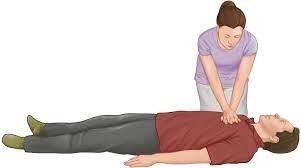
D. Begin chest compressions at 100/minute.
Correct- The absence of spontaneous respirations and palpable carotid pulse indicates cardiac arrest. In this situation, immediate initiation of cardiopulmonary resuscitation (CPR) is critical to provide circulation and oxygenation to the vital organs. Chest compressions are the initial step to address cardiac arrest and ensure blood flow to the body.
Full Explanation
A) Incorrect- Observing for swelling at the fracture site is important for assessing the client's musculoskeletal condition, but it is not the priority intervention in this situation. The absence of spontaneous respirations and palpable carotid pulse indicates cardiac arrest, and immediate intervention is needed.
B) Incorrect- Analyzing the cardiac rhythm in another lead is not the first priority when the client is in cardiac arrest. Cardiopulmonary resuscitation (CPR) should be initiated immediately to restore circulation.
C) Incorrect- Obtaining a 12-lead electrocardiogram is not the initial intervention in a client in cardiac arrest. CPR and defibrillation (if indicated) are the immediate actions to provide circulation and oxygenation to the vital organs.
D) Correct- The absence of spontaneous respirations and palpable carotid pulse indicates cardiac arrest. In this situation, immediate initiation of cardiopulmonary resuscitation (CPR) is critical to provide circulation and oxygenation to the vital organs. Chest compressions are the initial step to address cardiac arrest and ensure blood flow to the body.