
Nursing practice questions with comprehensive rationales
NurseDive Free Nursing Practice Question
Client teaching regarding the use of leukotriene receptor antagonist (LTRAS) drug such as Montelukast (Singulair) would include which statement by the nurse?
A. Take the medication when you are short of breath and begin wheezing.
B. It will take about 3 or 4 weeks before you notice a therapeutic effect.
C. Increase fiber and fluid in your diet to prevent the common adverse effect of constipation
D. This medication works by preventing the inflammation that causes your asthma attacks.
Leukotriene receptor antagonists (LTRAs) like Montelukast are commonly used in the treatment of asthma. They work by blocking the action of leukotrienes, which are inflammatory substances that can cause narrowing and inflammation of the airways in individuals with asthma. By preventing this inflammation, LTRAs help to reduce asthma symptoms and prevent asthma attacks.
This question is an excerpt from Nurse Dive's nursing test bank - ATI NUR 229 Pharmacology Test #1 OEK Proctored Exam. Take the full exam now
Full Explanation
Leukotriene receptor antagonists (LTRAs) like Montelukast are commonly used in the treatment of asthma. They work by blocking the action of leukotrienes, which are inflammatory substances that can cause narrowing and inflammation of the airways in individuals with asthma. By preventing this inflammation, LTRAs help to reduce asthma symptoms and prevent asthma attacks.
The other options mentioned in the statements are not accurate or appropriate for teaching about Montelukast. Taking the medication only when experiencing symptoms is not the recommended approach, as LTRAs are typically taken regularly as part of ongoing asthma management. The statement about the therapeutic effect taking several weeks to notice is not accurate, as Montelukast can start to provide symptom relief within a shorter timeframe.
Additionally, the statement about increasing fiber and fluid intake to prevent constipation is unrelated to the use of Montelukast and may not apply to this medication specifically.
Similar Questions
The nurse is reviewing medication errors. Which situation is an example of a medication error?
A. A patient develops hives after having started an IV antibiotic 24 hours earlier.
B. A patient complains of severe pain still present 60 minutes after a pain medication was given.
C. A patient receives a double dose of a medication because the nurse did not cut the pill in half.
A medication error refers to any preventable event that may cause or lead to inappropriate medication use or patient harm. In this case, the nurse administering a double dose of medication due to a failure to cut the pill in half is a medication error. It involves the administration of an incorrect dose, which can potentially result in harm or adverse effects for the patient.
D. A patient refuses her morning medication
Full Explanation
A medication error refers to any preventable event that may cause or lead to inappropriate medication use or patient harm. In this case, the nurse administering a double dose of medication due to a failure to cut the pill in half is a medication error. It involves the administration of an incorrect dose, which can potentially result in harm or adverse effects for the patient.
The other situations mentioned do not necessarily indicate medication errors. A patient developing hives after starting an IV antibiotic could have an allergic reaction, and appropriate actions should be taken to address the reaction. A patient complaining of severe pain still present after receiving pain medication may require further assessment and intervention to manage their pain effectively. A patient refusing her morning medication is not a medication error but rather a patient's right to refuse treatment, and appropriate documentation and communication should be done in such situations.
Loratadine (Claritin) has an advantage over traditional antihistamines such as diphenhydramine (Benadryl) in that loratadine has
A. Less sedative effect.
Traditional antihistamines like diphenhydramine are known to have sedating properties, which can cause drowsiness and impair cognitive function. On the other hand, loratadine is classified as a non-sedating or second-generation antihistamine. It is designed to have less of a sedative effect, allowing individuals to take it during the day without experiencing significant drowsiness or impairment. It is important to note that individual responses to medications can vary, and some individuals may still experience mild drowsiness with loratadine. However, compared to diphenhydramine, loratadine is generally associated with a lower risk of sedation.
B. Increased bronchodilating effects.
C. Less risk of cardiac arrhythmias.
D. Less gastrointestinal upset.
Full Explanation
Traditional antihistamines like diphenhydramine are known to have sedating properties, which can cause drowsiness and impair cognitive function. On the other hand, loratadine is classified as a non-sedating or second-generation antihistamine. It is designed to have less of a sedative effect, allowing individuals to take it during the day without experiencing significant drowsiness or impairment.
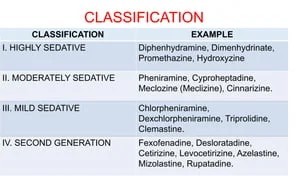
It is important to note that individual responses to medications can vary, and some individuals may still experience mild drowsiness with loratadine. However, compared to diphenhydramine, loratadine is generally associated with a lower risk of sedation.
A nurse is caring for a child who is experiencing status asthmaticus. Which of the following interventions is the priority for the nurse to take?
A. Determine the cause of the acute exacerbation
B. Administer an inhaled glucocorticoid
C. Administer a short-acting B2-agonist (SABA)
Status asthmaticus is a severe and potentially life-threatening asthma exacerbation that does not respond well to usual treatment measures. The primary goal in managing status asthmaticus is to relieve the bronchospasm and improve airflow. Short-acting 62-agonists, such as albuterol, are bronchodilators that work quickly to relax the smooth muscles of the airways, providing immediate relief of bronchospasm. While determining the cause of the acute exacerbation and obtaining a peak flow reading are important aspects of asthma management, in the case of status asthmaticus, the immediate priority is to administer a bronchodilator to alleviate the severe symptoms and improve the child's breathing. Once the acute symptoms are addressed, further assessment and interventions can be carried out to identify the cause and monitor the child's condition.
D. Obtain a peak flow reading
Full Explanation
Status asthmaticus is a severe and potentially life-threatening asthma exacerbation that does not respond well to usual treatment measures. The primary goal in managing status asthmaticus is to relieve the bronchospasm and improve airflow. Short-acting 62-agonists, such as albuterol, are bronchodilators that work quickly to relax the smooth muscles of the airways, providing immediate relief of bronchospasm.
While determining the cause of the acute exacerbation and obtaining a peak flow reading are important aspects of asthma management, in the case of status asthmaticus, the immediate priority is to administer a bronchodilator to alleviate the severe symptoms and improve the child's breathing. Once the acute symptoms are addressed, further assessment and interventions can be carried out to identify the cause and monitor the child's condition.