
Nursing practice questions with comprehensive rationales
NurseDive Free Nursing Practice Question
Loratadine (Claritin) has an advantage over traditional antihistamines such as diphenhydramine (Benadryl) in that loratadine has
A. Less sedative effect.
Traditional antihistamines like diphenhydramine are known to have sedating properties, which can cause drowsiness and impair cognitive function. On the other hand, loratadine is classified as a non-sedating or second-generation antihistamine. It is designed to have less of a sedative effect, allowing individuals to take it during the day without experiencing significant drowsiness or impairment. It is important to note that individual responses to medications can vary, and some individuals may still experience mild drowsiness with loratadine. However, compared to diphenhydramine, loratadine is generally associated with a lower risk of sedation.
B. Increased bronchodilating effects.
C. Less risk of cardiac arrhythmias.
D. Less gastrointestinal upset.
This question is an excerpt from Nurse Dive's nursing test bank - ATI NUR 229 Pharmacology Test #1 OEK Proctored Exam. Take the full exam now
Full Explanation
Traditional antihistamines like diphenhydramine are known to have sedating properties, which can cause drowsiness and impair cognitive function. On the other hand, loratadine is classified as a non-sedating or second-generation antihistamine. It is designed to have less of a sedative effect, allowing individuals to take it during the day without experiencing significant drowsiness or impairment.
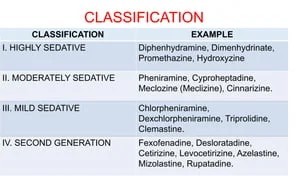
It is important to note that individual responses to medications can vary, and some individuals may still experience mild drowsiness with loratadine. However, compared to diphenhydramine, loratadine is generally associated with a lower risk of sedation.
Similar Questions
A nurse is caring for a child who is experiencing status asthmaticus. Which of the following interventions is the priority for the nurse to take?
A. Determine the cause of the acute exacerbation
B. Administer an inhaled glucocorticoid
C. Administer a short-acting B2-agonist (SABA)
Status asthmaticus is a severe and potentially life-threatening asthma exacerbation that does not respond well to usual treatment measures. The primary goal in managing status asthmaticus is to relieve the bronchospasm and improve airflow. Short-acting 62-agonists, such as albuterol, are bronchodilators that work quickly to relax the smooth muscles of the airways, providing immediate relief of bronchospasm. While determining the cause of the acute exacerbation and obtaining a peak flow reading are important aspects of asthma management, in the case of status asthmaticus, the immediate priority is to administer a bronchodilator to alleviate the severe symptoms and improve the child's breathing. Once the acute symptoms are addressed, further assessment and interventions can be carried out to identify the cause and monitor the child's condition.
D. Obtain a peak flow reading
Full Explanation
Status asthmaticus is a severe and potentially life-threatening asthma exacerbation that does not respond well to usual treatment measures. The primary goal in managing status asthmaticus is to relieve the bronchospasm and improve airflow. Short-acting 62-agonists, such as albuterol, are bronchodilators that work quickly to relax the smooth muscles of the airways, providing immediate relief of bronchospasm.
While determining the cause of the acute exacerbation and obtaining a peak flow reading are important aspects of asthma management, in the case of status asthmaticus, the immediate priority is to administer a bronchodilator to alleviate the severe symptoms and improve the child's breathing. Once the acute symptoms are addressed, further assessment and interventions can be carried out to identify the cause and monitor the child's condition.
A patient complains of worsening nasal congestion despite the use of oxymetazoline (Afrin) nasal spray every 2 to 4 hours for the past 5 days. The nurse's response is based on the knowledge that
A. Oxymetazoline should be administered in an hourly regimen for severe congestion.
B. Oxymetazoline is not an effective nasal decongestant
C. Sustained use of nasal decongestants over several days may result in rebound congestion
Rebound congestion, also known as rhinitis medicamentosa, is a common adverse effect associated with the prolonged use of nasal decongestants. It occurs when the blood vessels in the nasal passages become dependent on the medication for constriction and lose their ability to regulate naturally. As a result, when the medication wears off, the nasal congestion worsens, leading to a cycle of continued use and worsening symptoms. In this scenario, the patient's complaint of worsening nasal congestion despite using oxymetazoline every 2 to 4 hours for the past 5 days suggests the possibility of rebound congestion. The nurse should explain to the patient that prolonged or frequent use of nasal decongestants can lead to this effect and recommend gradually tapering off the medication use or discontinuing it altogether. The nurse may also suggest alternative non-medication strategies for managing nasal congestion, such as saline nasal sprays or steam inhalation.
D. The patient is probably displaying an idiosyncratic reaction to oxymetazoline
Full Explanation
Rebound congestion, also known as rhinitis medicamentosa, is a common adverse effect associated with the prolonged use of nasal decongestants. It occurs when the blood vessels in the nasal passages become dependent on the medication for constriction and lose their ability to regulate naturally. As a result, when the medication wears off, the nasal congestion worsens, leading to a cycle of continued use and worsening symptoms.
In this scenario, the patient's complaint of worsening nasal congestion despite using oxymetazoline every 2 to 4 hours for the past 5 days suggests the possibility of rebound congestion. The nurse should explain to the patient that prolonged or frequent use of nasal decongestants can lead to this effect and recommend gradually tapering off the medication use or discontinuing it altogether. The nurse may also suggest alternative non-medication strategies for managing nasal congestion, such as saline nasal sprays or steam inhalation.
A nurse is teaching a client who has a new prescription for dimenhydrinate. Which of the following instructions should the nurse include in the teaching?
A. Administer 24 hr before effects are desired.
B. Expect an increase in salivation.
C. Monitor for dizziness.
Dimenhydrinate is an antihistamine commonly used to treat motion sickness and vertigo. One of the common side effects of dimenhydrinate is dizziness. It can cause sedation and impair cognitive and motor functions. Therefore, the client should be advised to be cautious when engaging in activities that require alertness, such as driving or operating machinery. Monitoring for dizziness and taking appropriate precautions can help prevent accidents and ensure the client's safety.
D. Observe for diarrhea
Full Explanation
Dimenhydrinate is an antihistamine commonly used to treat motion sickness and vertigo. One of the common side effects of dimenhydrinate is dizziness. It can cause sedation and impair cognitive and motor functions. Therefore, the client should be advised to be cautious when engaging in activities that require alertness, such as driving or operating machinery. Monitoring for dizziness and taking appropriate precautions can help prevent accidents and ensure the client's safety.
The other options provided in the original response are incorrect:
- Administer 24 hr before effects are desired: This is not a correct instruction for dimenhydrinate. The medication is typically taken 30 minutes to 1 hour before the desired effects, such as before travel to prevent motion sickness.
- Expect an increase in salivation: Dimenhydrinate does not typically cause an increase in salivation. This is not a known side effect of the medication.
- Observe for diarrhea: Diarrhea is not a common side effect of dimenhydrinate. While gastrointestinal disturbances can occur with some antihistamines, it is not typically associated with dimenhydrinate use.