Nursing practice questions with comprehensive rationales
NurseDive Free Nursing Practice Question
Read the information below.
- Client reports pain at surgical incision site as 5 on a scale of 0 to 10.
- Client reports bladder fullness. Perineal dressing intact with minimal serosanguinous drainage.
- Client transferring out of bed to chair independently.
- Extremities cool and dry with 2+ peripheral pulses.
- Client reports abdominal cramping and small, hard, painful bowel movement after lunch.
- Ambulating independently in hallway.
- Reports pain as 8 on a scale of 0 to 10, Urinary catheter intact with 100 mL/hr of pink urine.
A. Encourage prolonged dangling before ambulation.
"Encourage prolonged dangling before ambulation" is not necessary or relevant in this case. The client is already transferring out of bed to a chair independently and ambulating independently in the hallway, indicating sufficient mobility.
B. Irrigate indwelling catheter with 500 mL of fluid.
"Irrigate indwelling catheter with 500 mL of fluid" is not indicated based on the provided information. The urinary catheter is intact, and the client is producing an appropriate amount of urine. There is no indication of urinary retention or need for irrigation.
C. Administer an enema.
"Administer an enema" is not necessary at this point. The client has reported a small, hard, painful bowel movement, which indicates constipation. However, conservative measures such as encouraging oral fluid intake and possibly adding dietary fiber should be tried first before considering an enema.
D. Assist the client with a sitz bath.
"Assist the client with a sitz bath" is not directly related to the client's current symptoms. A sitz bath is typically used for perineal hygiene, pain relief, or healing after certain surgical procedures, but it does not address the reported abdominal cramping or constipation.
E. Encourage oral fluid intake.
Adequate fluid intake helps to soften the stool, prevent constipation, and ease bowel movements. It can also help with bladder function and prevent urinary tract infections. This intervention is particularly relevant given the client's complaint of abdominal cramping and a small, hard, painful bowel movement.
This question is an excerpt from Nurse Dive's nursing test bank - ATI PN Comprehensive Predictor 2023 - Proctored Exam 1. Take the full exam now
Full Explanation
Adequate fluid intake helps to soften the stool, prevent constipation, and ease bowel movements. It can also help with bladder function and prevent urinary tract infections. This intervention is particularly relevant given the client's complaint of abdominal cramping and a small, hard, painful bowel movement.
The other options are not appropriate based on the information provided:
- "Encourage prolonged dangling before ambulation" is not necessary or relevant in this case. The client is already transferring out of bed to a chair independently and ambulating independently in the hallway, indicating sufficient mobility.
- "Irrigate indwelling catheter with 500 mL of fluid" is not indicated based on the provided information. The urinary catheter is intact, and the client is producing an appropriate amount of urine. There is no indication of urinary retention or need for irrigation.
- "Administer an enema" is not necessary at this point. The client has reported a small, hard, painful bowel movement, which indicates constipation. However, conservative measures such as encouraging oral fluid intake and possibly adding dietary fiber should be tried first before considering an enema.
- "Assist the client with a sitz bath" is not directly related to the client's current symptoms. A sitz bath is typically used for perineal hygiene, pain relief, or healing after certain surgical procedures, but it does not address the reported abdominal cramping or constipation.
Similar Questions
A nurse is caring for a client who has been admitted to the mental health unit. While reinforcing teaching about the client's prescribed medications, the nurse communicates truthfully about the adverse effects of the medications.
Which of the following ethical concepts is the nurse exhibiting?
A. Justice
Justice refers to fairness and equitable treatment, ensuring that individuals receive what they are due and that resources are distributed appropriately. While justice is an important ethical concept in healthcare, it is not directly applicable to the nurse's communication about adverse effects.
B. Veracity
Veracity refers to the principle of truthfulness and honesty in communication. By truthfully communicating about the adverse effects of the prescribed medications, the nurse is demonstrating veracity. This ethical principle emphasizes the importance of providing accurate information to the client to promote informed decision-making and autonomy.
C. Autonomy
Autonomy refers to respecting the right of individuals to make their own decisions and choices regarding their healthcare. While truthfully communicating about adverse effects supports autonomy, autonomy itself is not the specific ethical concept being exhibited in this scenario.
D. Beneficence
Beneficence refers to the ethical principle of acting in the best interest of the client and promoting their well-being. While providing accurate information about adverse effects can be seen as a form of beneficence, it does not directly address the nurse's truthful communication in this specific scenario.
Full Explanation
Veracity refers to the principle of truthfulness and honesty in communication. By truthfully communicating about the adverse effects of the prescribed medications, the nurse is demonstrating veracity. This ethical principle emphasizes the importance of providing accurate information to the client to promote informed decision-making and autonomy.
Justice refers to fairness and equitable treatment, ensuring that individuals receive what they are due and that resources are distributed appropriately. While justice is an important ethical concept in healthcare, it is not directly applicable to the nurse's communication about adverse effects.
Autonomy refers to respecting the right of individuals to make their own decisions and choices regarding their healthcare. While truthfully communicating about adverse effects supports autonomy, autonomy itself is not the specific ethical concept being exhibited in this scenario. Beneficence refers to the ethical principle of acting in the best interest of the client and promoting their well-being. While providing accurate information about adverse effects can be seen as a form of beneficence, it does not directly address the nurse's truthful communication in this specific scenario.
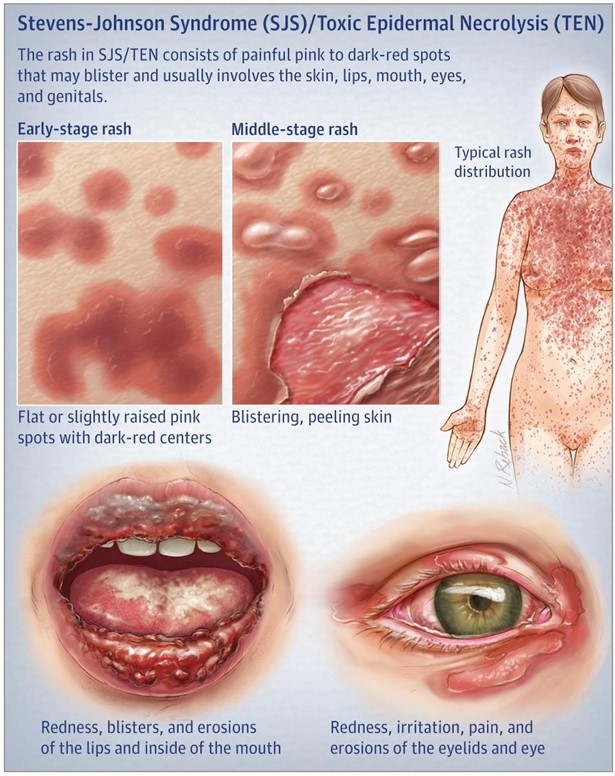
A nurse is reinforcing teaching with a client who is taking allopurinol about the risk for developing Stevens-Johnson syndrome.
For which of the following manifestations should the nurse instruct the client to monitor and report?
A. Tinnitus with ear pain
It is not typically associated with Stevens- Johnson syndrome. It may indicate another condition or side effect unrelated to SJS.
B. Hyperreflexia
It is not a characteristic manifestation of Stevens-Johnson syndrome. It may indicate a neurological condition or reaction to another medication, but it is not specific to SJS.
C. Skin rash with fever
Stevens-Johnson syndrome (SJS) is a severe and potentially life-threatening hypersensitivity reaction that can occur as a rare side effect of certain medications, including allopurinol. Monitoring and early recognition of SJS symptoms are crucial for prompt medical. Skin rash with fever is a hallmark manifestation of Stevens-Johnson syndrome. It often starts with flu-like symptoms such as fever and malaise, followed by the appearance of a widespread, painful, and rapidly progressing rash. The rash typically involves the mucous membranes, including the mouth, nose, and eyes, and can be accompanied by blisters or sores. Prompt reporting of these symptoms is critical for early diagnosis and intervention.
D. Diplopia
It is not commonly associated with Stevens- Johnson syndrome. It may be caused by other ocular or neurological conditions.
Full Explanation
Explanation
C. Skin rash with fever
Stevens-Johnson syndrome (SJS) is a severe and potentially life-threatening hypersensitivity reaction that can occur as a rare side effect of certain medications, including allopurinol.
Monitoring and early recognition of SJS symptoms are crucial for prompt medical.
Skin rash with fever is a hallmark manifestation of Stevens-Johnson syndrome. It often starts with flu-like symptoms such as fever and malaise, followed by the appearance of a widespread, painful, and rapidly progressing rash. The rash typically involves the mucous membranes, including the mouth, nose, and eyes, and can be accompanied by blisters or sores. Prompt reporting of these symptoms is critical for early diagnosis and intervention.
Tinnitus with ear pain in (option A) is incorrect because it is not typically associated with Stevens- Johnson syndrome. It may indicate another condition or side effect unrelated to SJS.
Hyperreflexia, which refers to abnormally increased reflexes, in (option B) is incorrect because it is not a characteristic manifestation of Stevens-Johnson syndrome. It may indicate a neurological condition or reaction to another medication, but it is not specific to SJS.
Diplopia, or double vision, in option (D) is incorrect because it is not commonly associated with Stevens- Johnson syndrome. It may be caused by other ocular or neurological conditions.
In summary, the nurse should instruct the client taking allopurinol to monitor and report the manifestation of a skin rash with fever. This is important because it may indicate the development of Stevens-Johnson syndrome, a severe and potentially life-threatening reaction to the medication. Early recognition and medical intervention are crucial to minimize complications and ensure appropriate treatment.
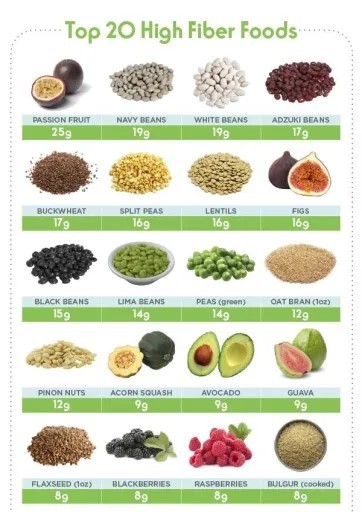
A nurse is reinforcing dietary teaching with a client who has constipation about appropriate food choices. Which of the following food selections by the client demonstrates an understanding of the teaching?
A. Puffed rice cereal
Puffed rice cereal is a low-fiber food and may not provide significant relief for constipation. It is typically low in fiber and may not help in promoting regular bowel movements.
B. Bran muffin
Bran muffins are a good choice for relieving constipation because they are high in dietary fiber. Fiber adds bulk to the stool and helps promote regular bowel movements. It can soften the stool, making it easier to pass.
C. Tomato juice
Tomato juice, while a healthy choice, is not particularly high in fiber. It contains some fiber, but not as much as other options like bran muffins.
D. Cottage cheese
Cottage cheese is a good source of protein, but it is not known for its high fiber content. While it can be a part of a balanced diet, it may not have a significant impact on relieving constipation.
Full Explanation
Bran muffins are a good choice for relieving constipation because they are high in dietary fiber. Fiber adds bulk to the stool and helps promote regular bowel movements. It can soften the stool, making it easier to pass.
Puffed rice cereal is a low-fiber food and may not provide significant relief for constipation. It is typically low in fiber and may not help in promoting regular bowel movements.
Tomato juice, while a healthy choice, is not particularly high in fiber. It contains some fiber, but not as much as other options like bran muffins.
Cottage cheese is a good source of protein, but it is not known for its high fiber content. While it can be a part of a balanced diet, it may not have a significant impact on relieving constipation.