Nursing practice questions with comprehensive rationales
NurseDive Free Nursing Practice Question
The nurse is aware that vitamin B12 is absorbed in the:
A. Duodenum
The duodenum is the first part of the small intestine where a significant amount of digestion takes place, but vitamin B12 is primarily absorbed in the lower part of the small intestine, called the ileum.
B. Stomach
The stomach plays a role in releasing intrinsic factor, which helps in the absorption of vitamin B12, but the actual absorption occurs in the small intestine.
C. Small intestine
Vitamin B12 absorption primarily occurs in the lower part of the small intestine (ileum), facilitated by intrinsic factors.
D. Large intestine
The large intestine primarily absorbs water and electrolytes; it is not a site for vitamin B12 absorption.
This question is an excerpt from Nurse Dive's nursing test bank - LPN ATI Fundamental Proctored Exam - Paredes. Take the full exam now
Full Explanation
A. The duodenum is the first part of the small intestine where a significant amount of digestion takes place, but vitamin B12 is primarily absorbed in the lower part of the small intestine, called the ileum.
B. The stomach plays a role in releasing intrinsic factor, which helps in the absorption of vitamin B12, but the actual absorption occurs in the small intestine.
C. Vitamin B12 absorption primarily occurs in the lower part of the small intestine (ileum), facilitated by intrinsic factors.
D. The large intestine primarily absorbs water and electrolytes; it is not a site for vitamin B12 absorption.
Similar Questions
A nurse is collecting data from a client who has an inadequate dietary intake of fiber. Which of the following findings should the nurse expect?
A. Brittle hair
Brittle hair is more associated with protein deficiencies or inadequate hydration rather than insufficient fiber intake.
B. Bleeding gums
Bleeding gums can be related to vitamin deficiencies (like vitamin C), poor oral hygiene, or gum disease but not primarily to inadequate fiber intake.
C. Constipation
Constipation is a common consequence of inadequate fiber intake, as fiber helps add bulk to stools, promoting regular bowel movements.
D. Memory loss
Memory loss is not typically a direct result of insufficient fiber intake; it may be associated with various neurological or age-related conditions.
Full Explanation
A. Brittle hair is more associated with protein deficiencies or inadequate hydration rather than insufficient fiber intake.
B. Bleeding gums can be related to vitamin deficiencies (like vitamin C), poor oral hygiene, or gum disease but not primarily to inadequate fiber intake.
C. Constipation is a common consequence of inadequate fiber intake, as fiber helps add bulk to stools, promoting regular bowel movements.
D. Memory loss is not typically a direct result of insufficient fiber intake; it may be associated with various neurological or age-related conditions.
The nurse is aware that vitamin B12 is absorbed in the:
A. duodenum
The duodenum is the first part of the small intestine but is not the primary site for vitamin B12 absorption. It's primarily absorbed in the lower part of the small intestine called the ileum.
B. stomach
While the stomach plays a role in releasing intrinsic factor that aids in B12 absorption, the actual absorption occurs in the small intestine, particularly the ileum.
C. small intestine
Vitamin B12 absorption primarily occurs in the lower part of the small intestine, facilitated by intrinsic factors.
D. large intestine
The large intestine is mainly responsible for water absorption and electrolyte balance, not vitamin B12 absorption.
Full Explanation
A. The duodenum is the first part of the small intestine but is not the primary site for vitamin B12 absorption. It's primarily absorbed in the lower part of the small intestine called the ileum.
B. While the stomach plays a role in releasing intrinsic factor that aids in B12 absorption, the actual absorption occurs in the small intestine, particularly the ileum.
C. Vitamin B12 absorption primarily occurs in the lower part of the small intestine, facilitated by intrinsic factors.
D. The large intestine is mainly responsible for water absorption and electrolyte balance, not vitamin B12 absorption.
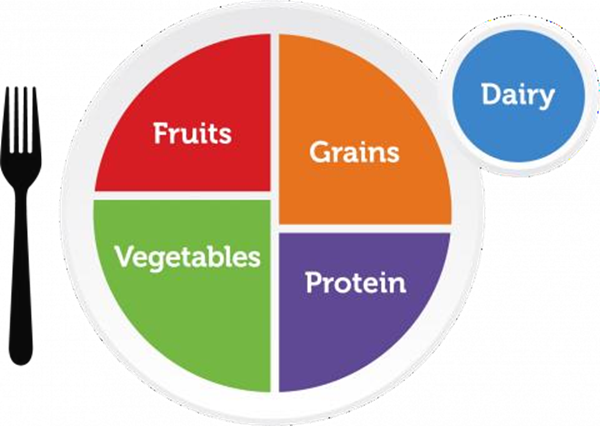
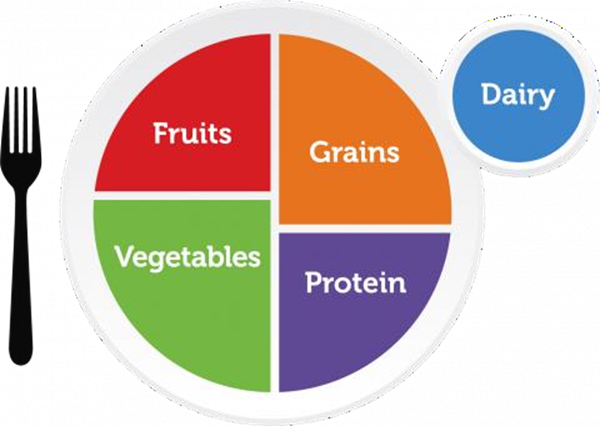
Which food makes up half of the USDA MyPlate?
A. proteins and starches
Proteins and starches together are not represented as one-half of the MyPlate; they are grouped separately.
B. fruits and vegetables
Half of the plate should be filled with fruits and vegetables, which provide vitamins, minerals, fiber, and antioxidants. The other half should be divided between grains and proteins, which provide carbohydrates, protein, iron and B vitamins.
C. dairy and fats
Dairy and fats are important but do not compose half of the MyPlate. Dairy is a separate food group on the plate.
D. grains and starches
Grains and starches are important but do not compose half of the plate according to the MyPlate plan.
Full Explanation
A. Proteins and starches together are not represented as one-half of the MyPlate; they are grouped separately.
B. Half of the plate should be filled with fruits and vegetables, which provide vitamins, minerals, fiber, and antioxidants. The other half should be divided between grains and proteins, which provide carbohydrates, protein, iron, and B vitamins.
C. Dairy and fats are important but do not compose half of the MyPlate. Dairy is a separate food group on the plate.
D. Grains and starches are important but do not compose half of the plate according to the MyPlate plan.