
Nursing practice questions with comprehensive rationales
NurseDive Free Nursing Practice Question
When planning care for an adolescent with anorexia nervosa, which nursing problem has the highest priority?
A. Disturbed Body Image.
B. Interrupted Family Processes.
C. Imbalanced Nutrition: less than body requirements.
Imbalanced Nutrition: less than body requirements would be the nursing problem with the highest priority for an adolescent with anorexia nervosa. Anorexia nervosa is characterized by a severe restriction of food intake leading to a significantly low body weight, which can have serious physical and psychological consequences. Therefore, addressing the client's malnutrition and promoting adequate nutrition intake is crucial to prevent further complications. Disturbed Body Image, Interrupted Family Processes, and Noncompliance with treatment regimen are important nursing problems to address, but they are secondary to the client's malnutrition.
D. Noncompliance with treatment regimen.
This question is an excerpt from Nurse Dive's nursing test bank - RN Hesi Exit Proctored Exam. Take the full exam now
Full Explanation
Imbalanced Nutrition: less than body requirements would be the nursing problem with the highest priority for an adolescent with anorexia nervosa. Anorexia nervosa is characterized by a severe restriction of food intake leading to a significantly low body weight, which can have serious physical and psychological consequences. Therefore, addressing the client's malnutrition and promoting adequate nutrition intake is crucial to prevent further complications. Disturbed Body Image, Interrupted Family Processes, and Noncompliance with treatment regimen are important nursing problems to address, but they are secondary to the client's malnutrition.
Similar Questions
A client with Addison's disease becomes weak, confused, and dehydrated following the onset of an acute viral infection. The client's laboratory values include: sodium 129 mEq/L (129 mmol/L), glucose 54 mg/dl (2.97 mmol/L) and potassium 5.3 mEq/L (5.3 mmol/L).
When reporting the findings to the healthcare provider, the nurse anticipates a prescription for which intravenous medication?
Reference Ranges
- Sodium [Reference Range: Adult 136 to 145 mEq/L (136 to 145 mmol/L)
- Glucose (Reference Range: 0 to 50 years: 74 to 106 mg/dl. (4.1 to 5.9 mmol/L))
- Potassium [Reference Range: 3.5 to 5.0 mEq/L (3.5 to 5.0 mmol/L)
A. Broad spectrum antibiotic.
A broad-spectrum antibiotic may be necessary if there is evidence of a bacterial infection, but it does not directly address the symptoms associated with Addison's disease.
B. Regular insulin.
Regular insulin is used for managing high blood glucose levels in conditions such as diabetes, but in this case, the client has low glucose levels, so insulin is not the appropriate intervention.
C. Hydrocortisone.
The client with Addison's disease is experiencing weakness, confusion, and dehydration, which can be indicative of an adrenal crisis. The low sodium level (129 mEq/L) and low glucose level (54 mg/dl) further support this suspicion. An acute viral infection can trigger an adrenal crisis in individuals with Addison's disease. Intravenous hydrocortisone, a glucocorticoid, is the treatment of choice for managing an adrenal crisis. It helps to replenish cortisol levels and stabilize the client's condition. Hydrocortisone helps in restoring the body's stress response and regulating electrolyte and glucose levels.
D. Potassium chloride.
Potassium chloride is a medication used to treat low potassium levels (hypokalemia), but the client's potassium level is within the reference range (5.3 mEq/L). Therefore, potassium chloride is not indicated in this situation.
Full Explanation
The client with Addison's disease is experiencing weakness, confusion, and dehydration, which can be indicative of an adrenal crisis. The low sodium level (129 mEq/L) and low glucose level (54 mg/dl) further support this suspicion. An acute viral infection can trigger an adrenal crisis in individuals with Addison's disease.
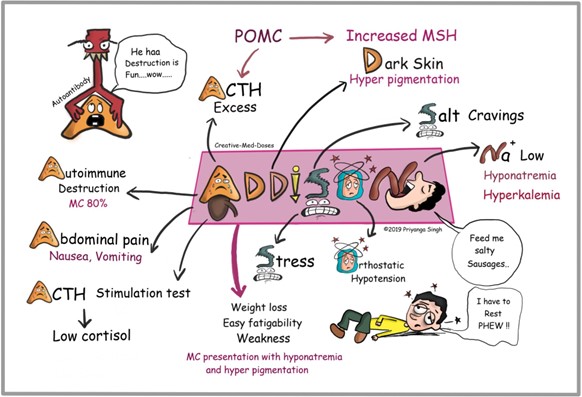
Intravenous hydrocortisone, a glucocorticoid, is the treatment of choice for managing an adrenal crisis. It helps to replenish cortisol levels and stabilize the client's condition.
Hydrocortisone helps in restoring the body's stress response and regulating electrolyte and glucose levels.
A broad-spectrum antibiotic may be necessary if there is evidence of a bacterial infection, but it does not directly address the symptoms associated with Addison's disease.
Regular insulin is used for managing high blood glucose levels in conditions such as diabetes, but in this case, the client has low glucose levels, so insulin is not the appropriate intervention.
Potassium chloride is a medication used to treat low potassium levels (hypokalemia), but the client's potassium level is within the reference range (5.3 mEq/L). Therefore, potassium chloride is not indicated in this situation.
A college student brings a dorm roommate to the campus clinic because the roommate has been talking to someone who is not present. The client tells the nurse that the voices are saying, "Kill, kill." Which question should the nurse ask the client next?
A. "When did these voices begin?"
B. "Do you believe the voices are real?"
C. "Are you planning to obey the voices?"
It is important to determine if the client has any plans or intentions to act upon the voices' instructions. This information helps gauge the level of risk and guides further interventions and safety measures. While the other questions may also be important to ask during the assessment, determining if the client believes the voices are real and when the voices began can provide valuable information about the client's perception and the duration of the symptoms.
D. "Have you taken any hallucinogens?"
Asking about the use of hallucinogens is relevant to identify potential substance-induced causes of the hallucinations. However, assessing the client's intent and potential for harm is the priority in this situation.
Full Explanation
It is important to determine if the client has any plans or intentions to act upon the voices' instructions. This information helps gauge the level of risk and guides further interventions and safety measures.
While the other questions may also be important to ask during the assessment, determining if the client believes the voices are real and when the voices began can provide valuable information about the client's perception and the duration of the symptoms. Asking about the use of hallucinogens is relevant to identify potential substance-induced causes of the hallucinations. However, assessing the client's intent and potential for harm is the priority in this situation.
When planning care for an adolescent with anorexia nervosa, which nursing problem has the highest priority?
A. Disturbed Body Image.
Disturbed Body Image, Interrupted Family Processes, and Noncompliance with treatment regimen are important nursing problems to address, but they are secondary to the client's malnutrition.
B. Interrupted Family Processes.
Disturbed Body Image, Interrupted Family Processes, and Noncompliance with treatment regimen are important nursing problems to address, but they are secondary to the client's malnutrition.
C. Imbalanced Nutrition: less than body requirements.
Less than body requirements would be the nursing problem with the highest priority for an adolescent with anorexia nervosa. Anorexia nervosa is characterized by a severe restriction of food intake leading to a significantly low body weight, which can have serious physical and psychological consequences. Therefore, addressing the client's malnutrition and promoting adequate nutrition intake is crucial to prevent further complications.
D. Noncompliance with treatment regimen.
Disturbed Body Image, Interrupted Family Processes, and Noncompliance with treatment regimen are important nursing problems to address, but they are secondary to the client's malnutrition.
Full Explanation
less than body requirements would be the nursing problem with the highest priority for an adolescent with anorexia nervosa. Anorexia nervosa is characterized by a severe restriction of food intake leading to a significantly low body weight, which can have serious physical and psychological consequences. Therefore, addressing the client's malnutrition and promoting adequate nutrition intake is crucial to prevent further complications.
Disturbed Body Image, Interrupted Family Processes, and Noncompliance with treatment regimen are important nursing problems to address, but they are secondary to the client's malnutrition.