Nursing practice questions with comprehensive rationales
NurseDive Free Nursing Practice Question
While the nurse is talking with a female client, the client becomes silent for several seconds. Which is the nurse's best response?
A. To tell the client that help can be more effective if she shares her feelings
this may imply that the client is not cooperating and may make them feel guilty thus discouraging any further communication which may be useful in generating a treatment plan for the patient.
B. To interpret this action as an indication that the client is finished with the conversation
assuming that the client has completed her conversation is incorrect since it is an opportunity to explore the client’s feelings and thoughts that may be missed.
C. To ask the client a question so the interaction can continue
this is not the best action since it may interrupt the client’s natural process of reflection and expression while pressuring him/her to respond to the questions asked.
D. To remain silent and be attentive to the client's nonverbal communication
remaining silent and being attentive to the client’s nonverbal communication shows respect for the client’s pace and readiness to speak. Furthermore, it demonstrates the nurse’s presence and their support.
This question is an excerpt from Nurse Dive's nursing test bank - ATI ns 130 Exam Psychosocial Proctored Exam. Take the full exam now
Full Explanation
Choice A rationale: this may imply that the client is not cooperating and may make them feel guilty thus discouraging any further communication which may be useful in generating a treatment plan for the patient.
Choice B rationale: assuming that the client has completed her conversation is incorrect since it is an opportunity to explore the client’s feelings and thoughts that may be missed.
Choice C rationale: this is not the best action since it may interrupt the client’s natural process of reflection and expression while pressuring him/her to respond to the questions asked.
Choice D rationale: remaining silent and being attentive to the client’s nonverbal communication shows respect for the client’s pace and readiness to speak.
Furthermore, it demonstrates the nurse’s presence and their support.
Similar Questions
A client is on Clozaril (Clozapine). The nurse is aware that frequent blood work is essential during the first 6 months of treatment to monitor for the presence of what?
A. A decrease in white blood cells
Clozapine is an antipsychotic medication associated with agranulocytosis which is a condition where the bone marrow does not provide enough white blood cells. This increases an individual’s risk of infections. Therefore, frequent blood tests should be performed on an individual taking this medication to monitor the WBC count and stop the medication if need be.
B. A low hemoglobin levels
clozapine is not associated with a low hemoglobin level. Anemia may be caused by conditions such as iron deficiency, chronic conditions such as chronic kidney disease, and vitamin B12 deficiency.
C. An increase in white blood cells
An increase in white blood cell count is not a side effect of clozapine but can be caused by infections. Clozapine causes low white blood cell count.
D. Blood in the urine
blood in urine is not a side effect of clozapine but can be caused by the use of medications such as cyclophosphamide.
Full Explanation
Choice A rationale: Clozapine is an antipsychotic medication associated with agranulocytosis which is a condition where the bone marrow does not provide enough white blood cells. This increases an individual’s risk of infections. Therefore, frequent blood tests should be performed on an individual taking this medication to monitor the WBC count and stop the medication if need be.
Choice B rationale: clozapine is not associated with a low hemoglobin level. Anemia may be caused by conditions such as iron deficiency, chronic conditions such as chronic kidney disease, and vitamin B12 deficiency.
Choice C rationale: An increase in white blood cell count is not a side effect of clozapine but can be caused by infections. Clozapine causes low white blood cell count.
Choice D rationale: blood in urine is not a side effect of clozapine but can be caused by the use of medications such as cyclophosphamide.
In the Working phase of the nurse-client relationship, the client and nurse work toward the goals that are agreed upon. (True or False)
A. True
B. False
Full Explanation
The working phase of the nurse-client relationship entails the implementation of interventions and evaluation of outcomes while modifying the plan of care with need. The nurse supports and educates the client while helping them to cope with their situation. This process requires constant communication, trust, and collaboration between the nurse and the client.
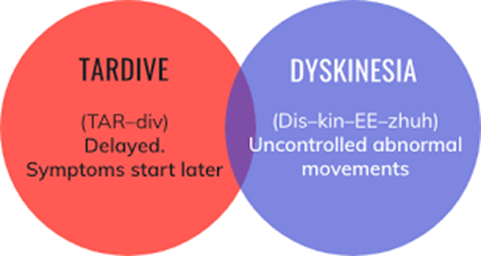
A client has been taking an antipsychotic medication for several years. It is of vital importance for the nurse to observe the client for tardive dyskinesia. Signs and symptoms of tardive dyskinesia include:
A. Absence of physical and mental movement
absence of physical and mental movement refers to catatonia that can occur in severe depression or schizophrenia.
B. Loss of ability to perform voluntary movements
akinesia refers to the absence of voluntary movement and can be seen in individuals with Parkinson’s disease or as a side effect of some antipsychotic medications.
C. Repetitious, involuntary muscle movements in the face and extremities
these are signs and symptoms of tardive dyskinesia which is a serious side effect of antipsychotic therapy resulting from the damage of nerve cells controlling movement and is irreversible especially when detected late.
D. Rigidity in the muscles that control an individual's gait, posture, and eye movements
this refers to dystonia which is a condition characterized by abnormal muscle tone resulting in painful muscle spasms and abnormal postures. This is a side effect of some antipsychotic medications.
Full Explanation
Choice A rationale: absence of physical and mental movement refers to catatonia that can occur in severe depression or schizophrenia.
Choice B rationale: akinesia refers to the absence of voluntary movement and can be seen in individuals with Parkinson’s disease or as a side effect of some antipsychotic medications.
Choice C rationale: these are signs and symptoms of tardive dyskinesia which is a serious side effect of antipsychotic therapy resulting from the damage of nerve cells controlling movement and is irreversible especially when detected late.
Choice D rationale: this refers to dystonia which is a condition characterized by abnormal muscle tone resulting in painful muscle spasms and abnormal postures. This is a side effect of some antipsychotic medications.