
Nursing practice questions with comprehensive rationales
NurseDive Free Nursing Practice Question
A nurse is admitting a client who is having an exacerbation of his asthma. When reviewing the provider's orders, the nurse recognizes that clarification is needed for which of the following medications?
A. Propranolol
The nurse should clarify with the provider why this medication is ordered and if there are any alternatives that are safer for the client. The other medications are appropriate for a client who has asthma.
B. Theophylline
C. Montelukast
D. Prednisone
This question is an excerpt from Nurse Dive's nursing test bank - ATI SP 250 Exam 3 Med Surg Proctored Exam. Take the full exam now
Full Explanation
The nurse should clarify with the provider why this medication is ordered and if there are any alternatives that are safer for the client. The other medications are appropriate for a client who has asthma.
Similar Questions
A nurse is providing dietary teaching for a client who has chronic obstructive pulmonary disease. Which of the following instructions should the nurse include?
A. "Limit water intake with meals."
B. "Use a bronchodilator 1 hour before eating."
The nurse should also advise the client to drink fluids between meals, eat small frequent meals, and increase protein intake to maintain muscle mass and immune function.
C. "Eat 3 large meals each day."
D. "Reduce protein intake."
Full Explanation
The nurse should also advise the client to drink fluids between meals, eat small frequent meals, and increase protein intake to maintain muscle mass and immune function.
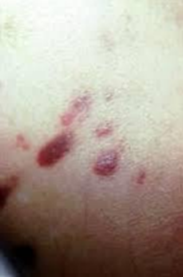
A nurse in a provider's office is assessing a client who has AIDS. The nurse notes that the client has multiple and widespread raised, purplish- brown skin lesions. The nurse should recognize that these findings indicate which of the following conditions?
A. Kaposi's sarcoma
The lesions are caused by human herpesvirus 8 and can appear anywhere on the body, but are more common on the face, trunk, and extremities. The other conditions are not associated with AIDS or immunosuppression.
B. Basal cell carcinoma
C. Actinic keratosis
D. Toxic epidermal necrosis
Full Explanation
The lesions are caused by human herpesvirus 8 and can appear anywhere on the body, but are more common on the face, trunk, and extremities. The other conditions are not associated with AIDS or immunosuppression.
A nurse is teaching a client who has tuberculosis and is to start medication therapy with isoniazid, rifampin and pyrazinamide. Which of the following instructions should the nurse include?
A. "Drink at least 8 ounces of water when you take the pyrazinamide tablet."
Pyrazinamide is a medication used to treat tuberculosis that can cause renal damage and crystal formation in the urine if not adequately hydrated. The client should also avoid alcohol and have regular liver function tests while taking this medication. Isoniazid should not be taken with antacids, as they can decrease its absorption and effectiveness. Sputum cultures are expected to be negative after 2 months of therapy, not 6 months. Providing a sputum specimen every 2 weeks is not an instruction for the client, but a part of the monitoring process by the health care team.
B. "Take isoniazid with an antacid."
C. "Expect your sputum cultures to be negative after 6 months of therapy."
D. "Provide a sputum specimen every 2 weeks to the clinic for testing."
Full Explanation
Pyrazinamide is a medication used to treat tuberculosis that can cause renal damage and crystal formation in the urine if not adequately hydrated. The client should also avoid alcohol and have regular liver function tests while taking this medication. Isoniazid should not be taken with antacids, as they can decrease its absorption and effectiveness. Sputum cultures are expected to be negative after 2 months of therapy, not 6 months. Providing a sputum specimen every 2 weeks is not an instruction for the client, but a part of the monitoring process by the health care team.